Ultraviolette Tesseract 2026: Updated Specs, Price, and the Real Reason the Delay Is Good News
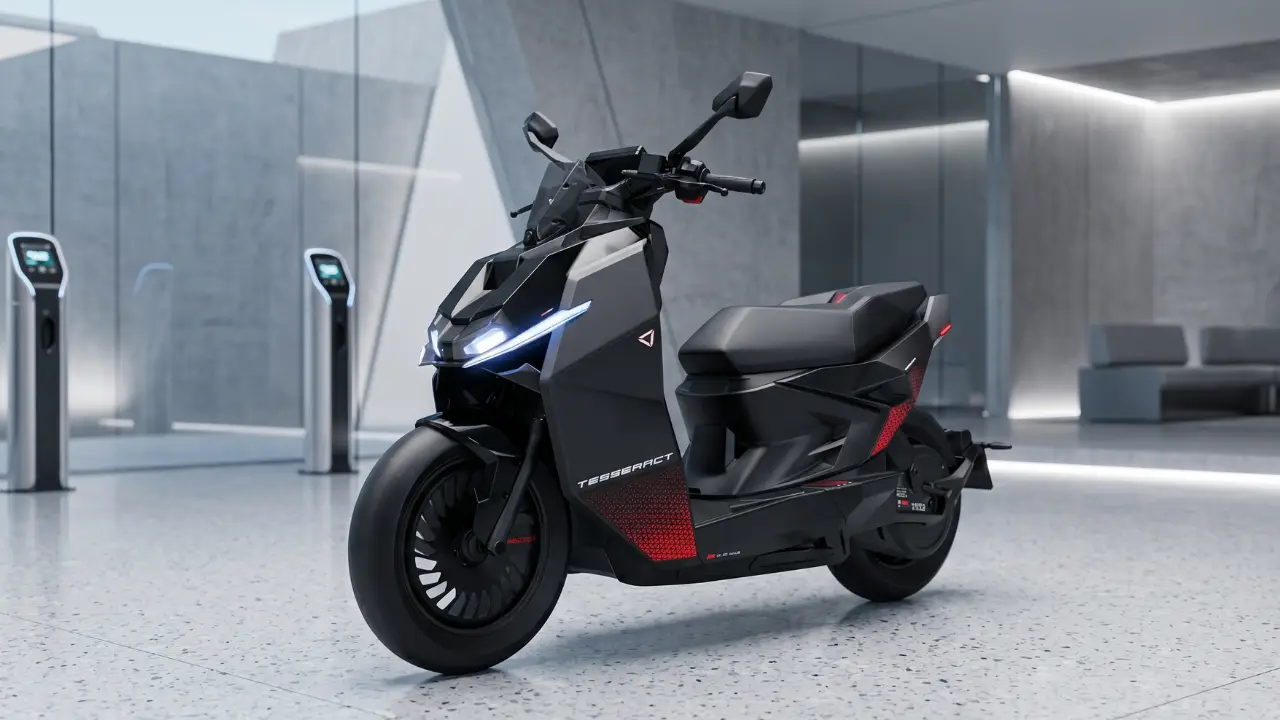
When an EV startup delays a scooter by a full year, the first thought is that something went wrong. Money ran out, supplier fell through, maybe the product wasn’t ready. But Ultraviolette pushing the Tesseract to January 2027? Once you dig into why, it actually makes sense. They rewrote the platform. Moved from a conventional architecture to 100V. That’s not a minor software fix. That’s a ground-up engineering decision, and for buyers who were ready to settle for whatever launched first, this delay is quietly one of the better things to happen in the Indian EV scooter space this year.
What Makes the Ultraviolette Tesseract Different From Everything Else Out There
Let’s be direct. Most electric scooters in India are glorified city runners. Capped at 80 or 90 km/h, nervous on highways, decent enough for your 15 km office commute but not much beyond that. The Ultraviolette Tesseract is designed around a different brief entirely.
125 km/h top speed. 20 hp. 0 to 60 in 2.9 seconds.
That last number. 2.9 seconds. That’s quicker than a lot of 150cc petrol bikes. The reason it can do that is the 100V architecture, which most people will read once and forget about. But it matters. Anyone who has ridden an EV through an Indian summer knows what thermal throttling feels like. You are cruising fine, then suddenly the power cuts back because the motor is cooking. The higher voltage platform handles heat far better. You get consistent power delivery whether it’s 10 AM or 2 PM in May.
Three battery variants are available. The 3.5 kWh base gives 162 km IDC range. The 5 kWh mid takes it to 220 km. And the 6 kWh top variant claims 261 km. Down here in West Bengal, 261 km IDC range practically means a week of city commuting without worrying about charging. Real world will be lower, probably 190 to 200 km with a pillion and AC city traffic. But that’s still very usable.
Charging is fast too. 20 to 80 percent in under 30 minutes with the Supernova charger. The top battery pack also has an 8-year warranty and a claimed 2 lakh kilometre lifespan.
The Radar System: This Is the Part Nobody Else Is Doing
Here is the feature that keeps coming up in every conversation about the Tesseract. ARAS 360 Awareness. Dual radar — front and rear. On a scooter. At this price.
To put that in context: blind-spot monitoring and rear cross-traffic alerts are features you typically find on cars costing 15 to 25 lakh rupees. Ultraviolette has put them on a two-wheeler at around 1.5 lakh. The Omnisense mirrors warn you when a vehicle is approaching fast from behind. In Indian traffic, where people treat lane discipline as a suggestion, that’s not a gimmick. That’s useful.
The AI dashcam is the other interesting piece. Ultraviolette claims it reads weather and terrain in real time and adjusts scooter settings automatically. Honestly, that one needs real-world validation before anyone should take it at face value. But the radar suite is hardware — it either works or it doesn’t, and Ultraviolette wouldn’t put it in press materials if it didn’t function.
Other features worth listing: 7-inch TFT touchscreen with navigation, wireless charging, 34-litre underseat storage, dual-channel ABS, traction control for wet and gravel surfaces, Hill Hold, and Park Assist. The list is long. Longer than most scooters at this price have any business offering.
Tesseract Price Breakdown: What You Are Actually Paying
| Variant | Battery | IDC Range | Standard Price | Early Bird Price |
|---|---|---|---|---|
| Tesseract 3.5 | 3.5 kWh | 162 km | Rs 1.45 lakh | Rs 1.20 lakh |
| Tesseract 5 | 5 kWh | 220 km | Rs 1.70 lakh | N/A |
| Tesseract 6 | 6 kWh | 261 km | Rs 2.00 lakh | N/A |
All prices ex-showroom. West Bengal on-road will add RTO, insurance, and applicable state EV incentives.
The introductory Rs 1.20 lakh pricing was for the first 50,000 customers. Over 70,000 bookings are already in, and Ultraviolette has confirmed those early buyers keep their locked-in price despite the delay. If you haven’t booked yet, you are looking at Rs 1.45 lakh for the base variant at standard pricing.
Also Read: New Tata Punch EV 2026: Complete Guide to India’s Best Value Electric SUV
How It Stacks Up Against the Ather 450X and Ola S1 Pro
This comparison comes up constantly, so here it is laid out cleanly.
| Feature | Tesseract Base | Ather 450X 2026 | Ola S1 Pro Gen 3 |
|---|---|---|---|
| Ex-showroom Price | Rs 1.45 lakh | ~Rs 1.49-1.51 lakh | ~Rs 1.17-1.25 lakh |
| IDC Range | 162 km | 126-161 km | ~176 km |
| Top Speed | 125 km/h | ~90-100 km/h | 117 km/h |
| Peak Power | 15 kW / 20 hp | ~6.4 kW | ~11 kW |
| 0-60 km/h | 2.9 sec | ~3.3-3.5 sec | Competitive in sport |
| Radar ADAS | Yes | No | No |
The Ather 450X is the most polished product available right now. Software experience, build quality, service network — Ather has been refining this for years. If you value after-sales reliability and want something that works well today, Ather is an easy recommendation.
Ola wins on value. The S1 Pro gives you a lot of features at a lower price point and Ola has been expanding its service footprint aggressively.
The Ultraviolette Tesseract wins on performance and safety technology. There is no other way to say it. 20 hp against 6.4 kW is not a close comparison. 125 km/h top speed against 90-100 km/h is a different category of machine. The gap is large enough that it’s not really a straight choice between three similar products — it depends entirely on what matters to you.
The Delay: Let’s Address It Honestly
January 2027 is a long time away. For riders who put a booking down in early 2025 expecting a mid-2025 delivery, this is frustrating. No point pretending otherwise.
But the 100V architecture change is not a minor update. Moving from a conventional voltage platform to 100V mid-development means redoing motor design, battery management systems, thermal management, and charging circuitry. Ultraviolette is a small company by industry standards. The fact that they caught the opportunity to make this upgrade rather than launch a less capable product and patch it later — that’s actually a sign of engineering discipline, not mismanagement.
The real risk is execution. Indian EV startups have a complicated history with timelines. Ultraviolette has delivered on the F77 motorcycle, which helps their credibility. But January 2027 is a target, not a guarantee. Pre-bookers should keep that in mind.
Who This Scooter Is Actually For
Tech-forward urban riders. People doing 40 to 80 km a day who also want highway capability on weekends. Buyers upgrading from a 150 to 200cc petrol scooter who want a step-up in performance, not just a fuel cost reduction.
The Tesseract is not for someone buying their first two-wheeler. It’s not ideal if you need service support in a tier-2 or tier-3 town where Ultraviolette’s network is still thin. And if budget is the primary filter, Ola gives you more scooter per rupee right now.
But for the rider who wants the most capable, tech-loaded scooter available in India and is fine waiting until early 2027? This is the one.
Final Word on the Ultraviolette Tesseract
The Indian EV scooter market has been waiting for something that raises the ceiling. Not just lower running costs and decent city range, but a product that makes you genuinely not miss your petrol scooter. The Ultraviolette Tesseract is the closest thing to that we have seen so far.
Radar safety suite, 100V platform, 20 hp output, 125 km/h top speed — these are not spec-sheet flex points. They solve real problems: highway nervousness, thermal throttling in summer heat, blind-spot visibility in dense city traffic. Whether you’re commuting in Kolkata or heading out on the weekend, that’s a package that holds up.
The wait is real. January 2027 feels far. But this is one of those situations where patience probably pays off.