Skoda Kylaq Review: The Best Sub-4m SUV for Delhi Roads Right Now?
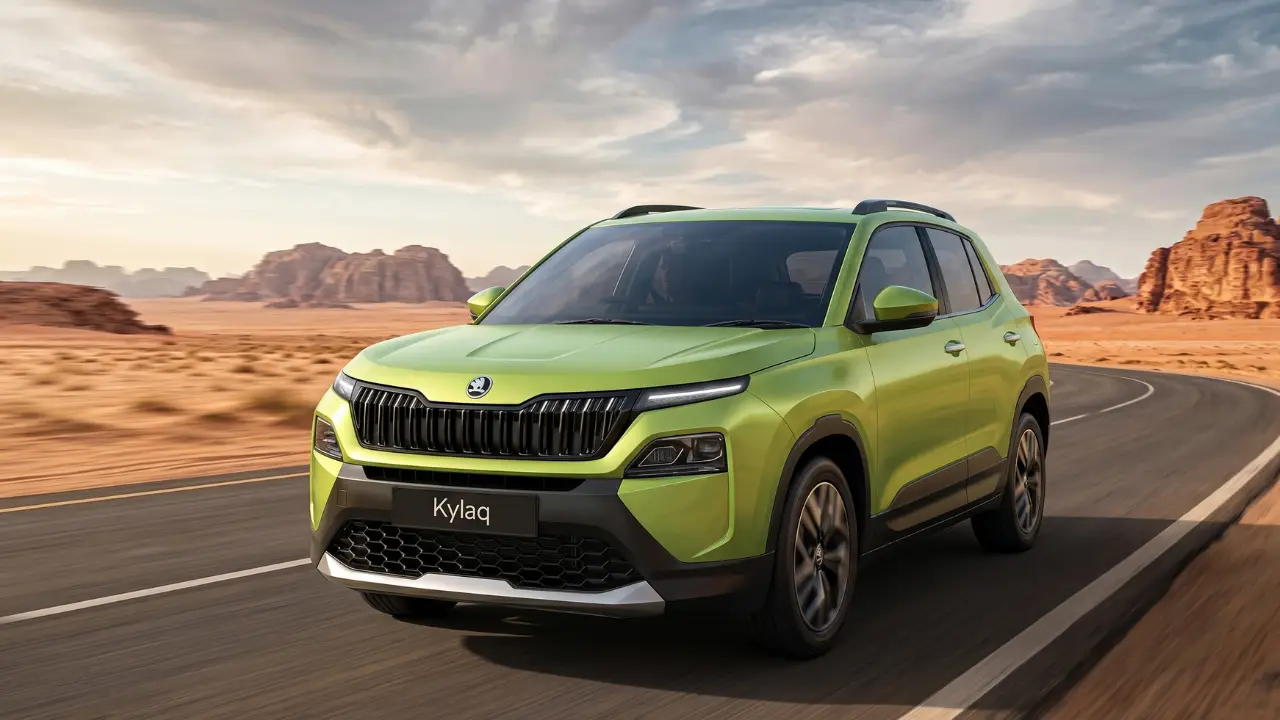
I’ll be honest. When Skoda first announced they were entering the sub-4m space, I was skeptical. This segment is already packed — Nexon, Brezza, Sonet, XUV 3XO — and most of them are genuinely good. Why would anyone need another one? But after spending real time with the Kylaq on Delhi roads, from the chaos of Dwarka’s sector streets to a long NH-48 run toward Gurugram, this Skoda Kylaq Review is my attempt to answer that honestly.
First Impressions and Styling: It Earns Attention on Delhi Roads
The Kylaq does not scream for attention. But it gets it anyway.
Standing next to it in a Saket parking lot, it genuinely looks wider and more planted than most rivals. 3,995 mm long, 1,783 mm wide — it sits right at the sub-4m limit but carries itself like a bigger car. The rugged plastic cladding and squared-off stance give it proper road presence without looking overdone.
I’ve been tracking the Taigun facelift and the XUV 3XO closely over the past few months. Hopping into the Kylaq after both feels like a completely different philosophy. Less flashy, more considered. The build quality reinforces that immediately. Shut the door. That solid, weighted thunk tells you something before you even turn the key.
And then there’s the 5-star Bharat NCAP rating — 30.88 out of 32 in adult protection. Numbers like that matter differently when you’re navigating a Noida expressway at 100 km/h with your family inside.
Also Read: Renault Duster 1.0 MT 2026 Real-World Review: Best Value Manual Midsize SUV Under ₹14 Lakh?
The Real-World Driving Experience: That 1.0 TSI Has Character
Take the post-monsoon stretch near Dwarka Sector 23. You know the kind — broken patches, sudden craters, the occasional unmarked speed breaker at 11 PM. In most compact SUVs, you brace. In the Kylaq, you just… drive. The 189 mm ground clearance does its job quietly. The suspension absorbs without drama. Not perfectly silent, but composed. There’s a difference.
The 1.0-litre TSI producing 115 PS and 178 Nm has a personality. Below 1,800 rpm in crawling DTC traffic? You feel the turbo lag. It’s there. Not severe, but real. Above that? The mid-range pull is strong and linear, and on NH-48 the overtakes feel genuinely effortless. This engine has more character than the segment average. It’s not just numbers.
The automatic is smooth enough for daily Gurugram stop-and-go. But step on it for a sudden merge on the ring road? It hesitates. Just a beat. Not a dealbreaker — but it’s there and worth knowing about. The manual is the more engaging pick if you care about that sort of thing.
Powertrain and Mileage at a Glance
| Spec | Detail |
|---|---|
| Engine | 1.0L 3-cylinder TSI Turbo-Petrol |
| Power | 115 PS |
| Torque | 178 Nm |
| Gearbox | 6-speed MT / 6-speed TC AT |
| ARAI Mileage (MT) | 19.68 kmpl |
| ARAI Mileage (AT) | 19.05 kmpl |
| Real-World Mileage | 11-13 kmpl (combined) |
| 0-100 km/h | ~10.5 seconds |
Real-world 11-13 kmpl in Delhi traffic is honest. Budget for it and you won’t feel cheated.
Living Inside the Cabin: Small Details, Big Difference
The ventilated and electrically adjustable front seats. Let me say it plainly. On a 42-degree Delhi afternoon in June, they are not a feature. They are survival. Period. After sitting through a 40-minute Outer Ring Road crawl with them on, going back to a non-ventilated car feels genuinely brutal.
The 10-inch touchscreen with wireless CarPlay works without fuss. The 6-speaker audio setup in top trims sounds noticeably better than what you’d expect at this price. And then there are the little Skoda things — a ticket holder, coat hooks, a cooled glovebox — that you only appreciate after living with the car for a week.
The 446-litre boot handled a full weekend trip to Rishikesh without compromise. Two large bags, one cabin bag, snacks, and a small cooler. Comfortable. Fold the rear seats and you get 1,265 litres — which is genuinely useful for an IKEA run.
Also Read: KTM RC 350 Expected Price, Launch Date & Why It Could Be the Sports Bike India Actually Needed
Rear seat? Two adults, completely fine. Good under-thigh support, decent recline. Three adults across the back on a long drive to Chandigarh — it’s a stretch. Possible, not comfortable. Be realistic about that.
What’s missing: no ADAS, no 360-degree camera. At this price, in 2026, that stings a little.
The Final Verdict: Is This Skoda Kylaq Review Telling You to Buy One?
Here’s where I land. This Skoda Kylaq Review is not for everyone — and that’s actually the point. It’s not trying to be everything.
Starting at ₹7.59 lakh and going up to around ₹13.65 lakh ex-showroom, the sweet spot is the mid-to-upper Signature and Prestige variants. That’s where the value truly clicks. If you prioritize safety, driving enjoyment, and a premium European feel in a practical package — buy it. Confidently.
If you need diesel efficiency for 2,000 km a month, or ADAS, or you regularly seat three adults in the back — look elsewhere. The Kylaq is not pretending to be that car.
But for the Delhi-NCR daily driver who wants something safe, fun, and genuinely well-made? It’s one of the strongest options in the segment right now.
Have you driven the Kylaq around Delhi or NCR? Did the highway feel match what I described, or was your experience different? Drop your honest take in the comments.