Hyundai Creta EV: The Complete Guide to India’s Most Practical Electric SUV (2026 Update)
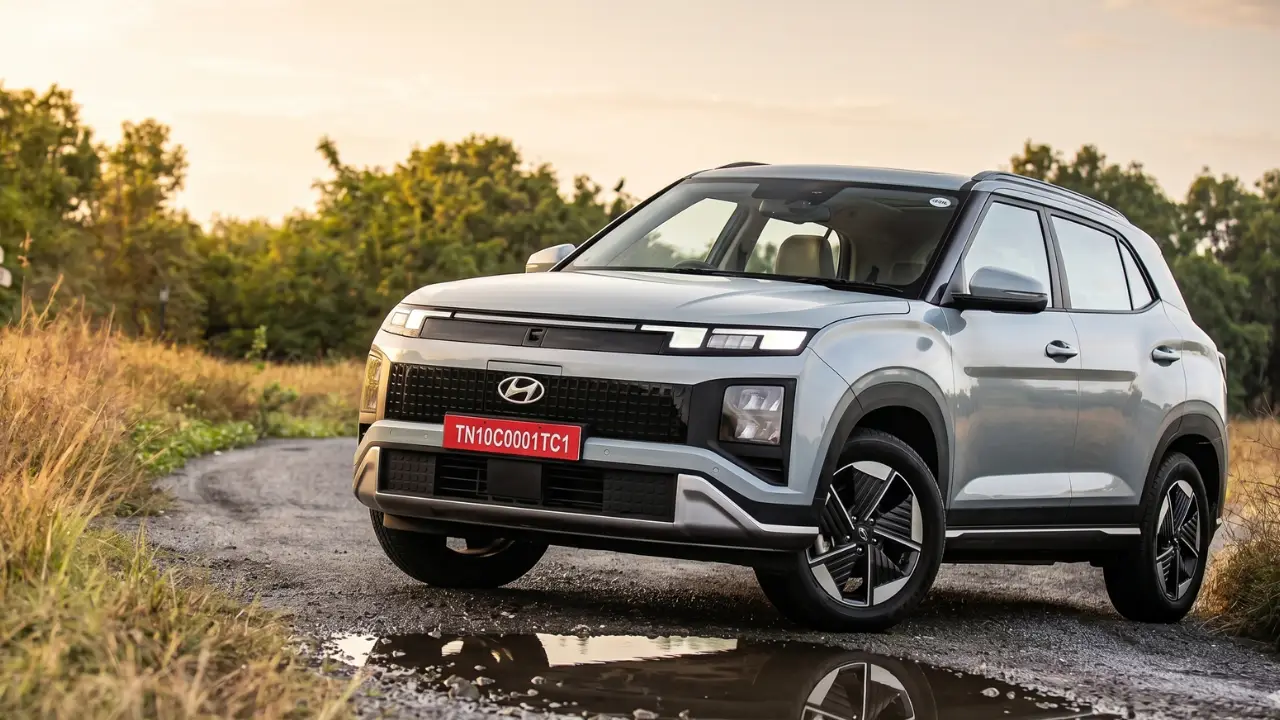
There’s a moment when you first sit inside the Creta EV — you grab the steering wheel, look around, and think: wait, this just feels like a Creta. Familiar dashboard layout, same roomy cabin, same sense of “okay, I can live with this every day.” And that’s actually the whole point. The Hyundai Creta EV isn’t trying to be some futuristic spaceship. It’s trying to be an EV that normal Indian families can actually commit to. And for the most part, it pulls it off.
What Is the Hyundai Creta EV and Why Should You Care
Launched at the Bharat Mobility Global Expo in January 2025, the Creta EV carries the weight of over 1.1 million units sold under the Creta name in India. That’s a lot of trust. Hyundai is essentially saying — you already love this car, now here it is without a fuel tank.
Two battery options. A 42 kWh standard range and a 51.4 kWh long range. ARAI-certified numbers are 420 km and 510 km. Real-world with AC running in mixed traffic? More like 280–350 km on the smaller pack and 360–420 km on the bigger one. Not the most exciting numbers on paper, but in day-to-day Bengaluru or Delhi driving, it’s more than enough.
As of May 2026, this is still one of the more refined and well-rounded electric SUVs you can buy under ₹25 lakh in India.
Features That Actually Stand Out in the Hyundai Creta EV
The feature list is genuinely strong. Panoramic sunroof on higher trims, large touchscreen, wireless Android Auto and Apple CarPlay, 360-degree camera, Bluelink connected car tech — it’s all there. The EV-specific digital cluster looks different and modern without being confusing to read.
Then there’s the Knight Edition, launched in October 2025. Blacked-out styling, exclusive badging, starts at around ₹21.45 lakh. If you want the EV to look aggressive and not just “responsible,” this trim does that job.
Safety: 6 airbags on higher variants, ABS, EBD, ESC, TPMS, hill assist, ISOFIX. Ground clearance is 190 mm — handles speed breakers and bad roads without drama. The 17-inch aero alloys look decent too, and they genuinely help efficiency, not just aesthetics.
Also Read: Maruti Suzuki eVX 2026: The Complete Guide to India’s Best New Electric SUV
Performance and Real-World Driving Feel
The 51.4 kWh Long Range makes 171 PS and 255 Nm. Does 0–100 km/h in about 7.9 seconds. The 42 kWh version is 135 PS — enough for city commutes, slightly pedestrian on expressways but not embarrassing.
The ride quality? Surprisingly smooth. Even over broken city roads, the suspension absorbs things well. And the cabin stays quiet. That low-NVH thing Hyundai talks about — it’s real. Coming from a petrol car, the silence takes some getting used to but you stop missing engine noise pretty quickly.
Efficiency numbers are solid. Autocar’s long-term test recorded up to 8.3 km/kWh in real conditions. Running costs work out to roughly ₹2.5–4 per km versus ₹8–12 per km on petrol. For someone doing 1,500 km a month, that’s potentially over ₹1 lakh saved annually. That’s a real number, not marketing math.
DC fast charging (CCS2, 100 kW+) does 10–80% in 39 minutes. Home charging on an 11 kW wall box takes around 4 hours for the 42 kWh pack. The car also supports V2L (vehicle-to-load), meaning you can run appliances off the car’s battery — useful during power cuts, genuinely.
One more thing worth mentioning: in 2026, a Creta EV drove 1,326.5 km in 24 hours using fast charging stops. Also passed high-altitude tests up to 14,500 feet. These numbers build confidence.
Hyundai Creta EV Price — What You Actually Pay
| Variant | Battery | Ex-Showroom (Approx.) |
|---|---|---|
| Executive | 42 kWh | ₹18.02 lakh |
| Smart | 42 kWh | ₹18.90 lakh |
| Premium | 42 kWh | ₹20.50 lakh |
| Excellence | 51.4 kWh | ₹23.50 lakh |
| Excellence Knight | 51.4 kWh | ₹24.70 lakh |
Ex-showroom India, May 2026. On-road in Delhi or Mumbai: ₹19.1 lakh to ₹26+ lakh depending on variant.
The Creta EV costs roughly ₹7 lakh more than a petrol Creta in comparable trim. That’s a hard pill for many buyers. But the battery warranty is 8 years / 1,60,000 km — which does a lot of heavy lifting in terms of long-term peace of mind. And when you factor in fuel savings over 5–6 years, the math starts making sense.
How the Hyundai Creta EV Handles the Competition
The Tata Curvv EV is the car it’s currently fighting a pretty brutal turf war with. Curvv offers 45 kWh and 55 kWh options, 502 km claimed range, coupe-style design. On paper, they’re close. In real-world driving, the Creta EV edges ahead on efficiency and ride refinement. The Curvv looks sportier. The Creta feels more settled.
Against MG ZS EV and BYD Atto 3 — the Creta EV holds up well on range in Long Range form. Chinese rivals are often priced sharper, but resale value and service network depth still lean Hyundai’s way in India. Walk into any tier-2 city and there’s a Hyundai service center. That can’t be said for every EV brand right now.
The Maruti e-Vitara is coming and will shake things up at the lower end. Worth watching.
Who Should Actually Buy the Hyundai Creta EV
Urban or suburban families. People upgrading from an ICE Creta or similar SUV. Buyers who have a home charger set up or live in a society where charging is being installed. If you’re doing 300–500 km a week, mostly city driving with occasional highway runs — this car fits your life well.
Also works for buyers who are curious about EVs but wary of newer Chinese brands. The Creta EV gives you that EV experience with the comfort of a familiar, well-supported brand behind it.
Skip it if you drive long highway stretches regularly without access to fast chargers. Or if your budget is under ₹20 lakh on-road. In that case, a Nexon EV or waiting for future price corrections is the smarter move.
India’s EV Market in 2026 — Where Does the Creta EV Fit
India’s EV PV market crossed 2.2 lakh units in FY2026. January 2026 alone saw 18,000 EVs sold, up 51% year-on-year. Tata leads with around 40–43% market share. Mahindra is surging. JSW MG is holding ground.
Hyundai and Kia together hold about 2–3% EV market share in early 2026. Modest. The Creta EV accounts for most of that Hyundai volume — sales have been steady but not explosive. Premium pricing and patchy highway charging infrastructure are the real friction points. In metros, you’re fine. Beyond that, you need to plan.
Government push through subsidies, FAME-II, and state incentives — combined with falling battery costs — points to a better environment coming in the next 12–18 months. The Creta EV is set up to benefit from that.
My Take — Is It Worth Buying in 2026
The Creta EV is not trying to blow your mind. It’s trying to make EV ownership feel normal. And that’s actually harder to pull off than building something flashy.
For the right buyer, this SUV delivers: low running costs, strong warranty, a refined daily drive, and the confidence of Hyundai’s service network behind it. The 51.4 kWh Long Range in Excellence or Knight trim is the version to go for if budget allows. Best balance of range, features, and ownership comfort.
If you can charge at home and your weekly driving is within 400–450 km, the numbers work in your favour from year one. Real owners are reporting smooth daily usage and meaningful fuel savings. That’s what matters beyond spec sheets.
As charging infrastructure grows and prices come down — and they will — the case for this car only gets stronger. Right now, it’s already a smart buy for the right person.
So here’s the question worth sitting with: if your petrol bill is ₹8,000–10,000 a month and you already trust the Creta name — what’s actually stopping you?
FAQs
What is the real-world range of the Hyundai Creta EV with AC running?
In mixed city and highway driving with AC, the 42 kWh variant delivers around 280–350 km. The 51.4 kWh Long Range variant delivers 360–420 km. Exact range depends on speed, load, and weather.
How long does DC fast charging take on the Creta EV?
On a CCS2 fast charger above 100 kW, 10% to 80% takes around 39 minutes. Hyundai has pushed further improvements through OTA updates, so this number keeps getting better.
Creta EV or Tata Curvv EV — which one to pick?
Both are solid. The Creta EV wins on ride refinement, real-world efficiency, and service network. The Curvv EV has a sportier look and competitive range on the larger 55 kWh pack. If daily comfort and brand reliability are your priority, go Creta. If design and pricing matter more, consider the Curvv.
What is the battery warranty on the Hyundai Creta EV?
8 years or 1,60,000 km — whichever comes first. This is one of the better battery warranties available in the Indian EV market right now and significantly reduces long-term risk for buyers.