TVS iQube S 4.7 kWh (2026): Updated Complete Guide to Specs, Real Range, Price and Honest Buyer Opinion
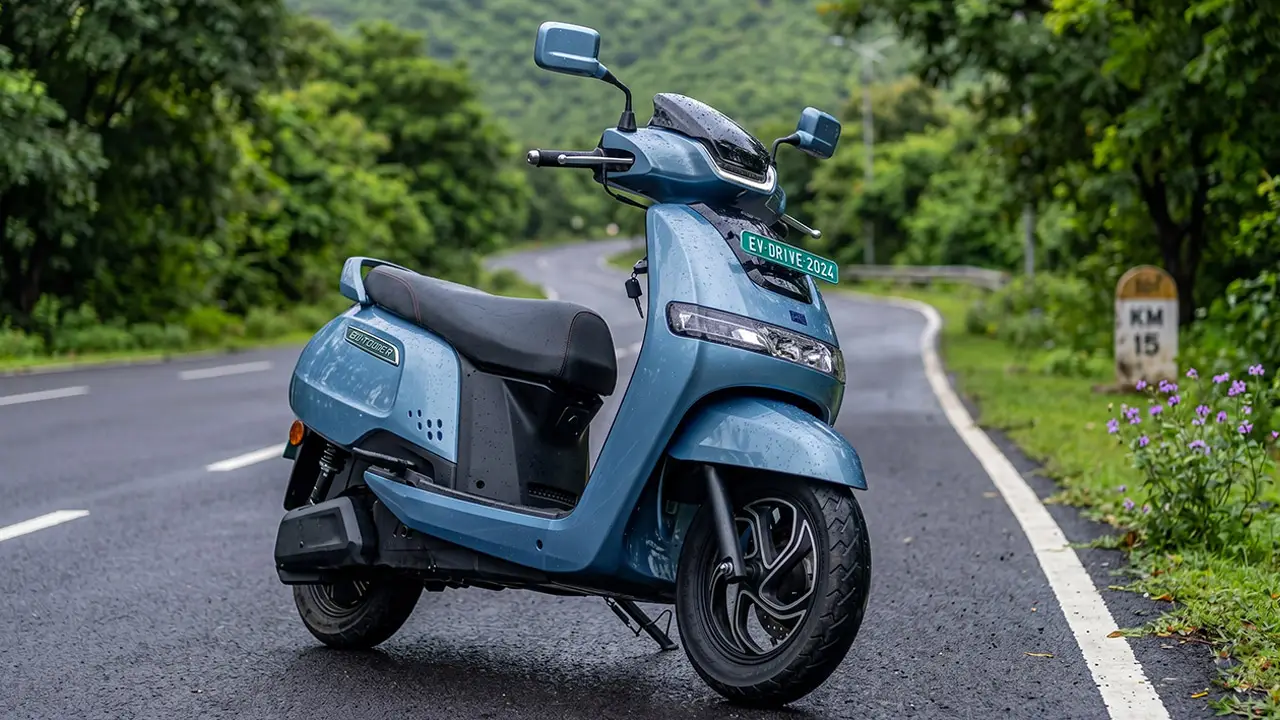
Okay, so TVS quietly dropped the updated TVS iQube S in early May 2026 and honestly, not enough people are talking about it. The old 3.5 kWh version was fine. Decent, even. But “decent” doesn’t really cut it when petrol prices keep climbing and Kolkata traffic keeps getting worse. The new 4.7 kWh battery changes the math significantly, and after going through all the official specs and early owner feedback, I think this update deserves a proper, no-nonsense breakdown.
What TVS Actually Changed This Time
Let’s be clear about one thing: this isn’t just a sticker refresh. The battery going from 3.5 kWh to 4.7 kWh is a real, meaningful jump.
TVS also replaced the older 5-inch display with a much bigger 7-inch TFT unit that hits 1000 lux brightness. In direct afternoon sunlight, most scooter displays become completely unreadable. This one holds up. The colour palette also got refreshed with three new dual-tone options: Magnificence Purple Beige, Harlequin Blue Beige, and Mercury Grey. The Purple Beige one, in particular, looks surprisingly good in person.
Everything else that already worked well stays put. The 32-litre underseat storage (fits two full-face helmets comfortably), the wide footboard, the comfortable suspension setup. TVS didn’t break what wasn’t broken.
TVS iQube S Key Specs at a Glance
| Specification | Details |
|---|---|
| Battery | 4.7 kWh (IP67-rated, BMS-protected) |
| IDC Certified Range | 175 km |
| Real-World City Range | 110 to 140 km |
| Motor Peak Power / Torque | 4.4 kW / 140 Nm |
| Top Speed | 82 km/h |
| 0 to 40 km/h | 4.3 seconds |
| Charging (0 to 80%) | 4 hours via 950W charger |
| Display | 7-inch TFT, 1000 lux |
| Underseat Storage | 32 litres |
| Kerb Weight | 128.8 kg |
| Ex-Showroom Price (Delhi) | ~Rs 1.37 lakh (effective, post-subsidy) |
What Range Can You Realistically Expect
TVS claims 175 km on the IDC test. That number is real, but it’s also a lab number. Controlled speed, no passenger, smooth road. Not exactly peak hour on EM Bypass.
In actual city riding, expect 110 to 140 km per charge. That’s still very usable for most people. If you’re doing 40 to 50 km daily in city traffic, one charge easily covers 2 to 3 days. The 950W portable charger gets you from 0 to 80% in about 4 hours. Plug it in at 10 PM, ride out at 7 AM. Simple.
Where the range takes a hit is two-up riding on Power mode through constant stop-go traffic. You’ll probably see closer to 100 to 110 km in that scenario. Worth keeping in mind if you’re expecting the full 140 km every day regardless of conditions.
Also read: Ultraviolette X47 Crossover: The Most Capable Electric Motorcycle You Can Buy in India Right Now
How Does the TVS iQube S Actually Perform
Let’s talk about how this thing feels when you actually ride it.
The hub motor puts out 140 Nm of torque at the wheel. On paper that sounds like a lot. On the road, what it actually means is this: when the signal turns green at a busy crossing, you can pull ahead of most traffic instantly. The 0 to 40 km/h sprint takes 4.3 seconds. It’s quick enough to feel genuinely fun. Not aggressive, but satisfying.
Top speed is 82 km/h. Honestly? In Kolkata traffic you rarely get past 50 to 55 km/h anyway. On a rare open stretch like early morning on the VIP Road, 82 km/h is more than comfortable. It’s no highway cruiser, but it was never meant to be one.
The Eco and Power modes give you some flexibility. Eco mode noticeably smoothens throttle response and stretches your range. Power mode makes the bike feel a bit livelier for those days when you’re running late. Regenerative braking is subtle but it does add a little back to the battery in heavy stop-go situations.
Suspension handles the broken tarmac around Gariahat and the random speed humps near Salt Lake sector 5 without any serious discomfort. It’s not a sports suspension setup. But for a 128 kg family scooter, it does its job well. Your back won’t hate you after a 30 km commute.
One real complaint from existing iQube owners worth flagging: the hub motor can get warm on sustained speeds above 70 km/h for extended durations. City use is completely fine. But if you’re planning long highway runs frequently, the ST variant with its bigger motor setup is the smarter choice.
Features: What the 7-Inch Display Actually Offers
The big 7-inch TFT display is genuinely impressive for this price point. It’s not just a large speedometer. You get turn-by-turn navigation, incoming call and SMS alerts via Bluetooth, music controls, DTE (distance-to-empty), trip data, and even Alexa voice integration if you want to use that.
The SmartXonnect app ties it all together. Geofencing, anti-theft alerts, crash detection, live vehicle tracking, OTA software updates. These are the kinds of features that usually show up on scooters priced Rs 20,000 to 30,000 more.
The reverse-assist feature deserves a specific mention. Parking a 128 kg scooter in a tight spot, especially on an incline, is genuinely annoying. The forward-reverse park assist makes this noticeably easier. Small thing, but you’ll appreciate it every single day.
USB charger is present. LED lighting all around. Flip key. These are table stakes at this price and TVS delivers.
Price Breakdown and What You Actually Pay
Ex-showroom (Delhi, post-subsidy): approximately Rs 1.37 lakh. Before subsidies, most listings show Rs 1.58 to 1.59 lakh.
In Kolkata, the on-road price after RTO, insurance, handling, and charger typically lands between Rs 1.62 to 1.75 lakh. State subsidy availability and RTO charges vary, so get a specific quote from your nearest TVS dealer before assuming a number.
Booking opens at Rs 5,000, fully refundable.
Now the part that actually matters for most buyers: running cost. Petrol scooters cost roughly Rs 2 to 3 per km in fuel. The iQube S runs on approximately Rs 0.18 to 0.25 per km in electricity. On a 50 km daily commute, that’s a saving of around Rs 85 to 140 per day. Over a full year, you’re saving somewhere between Rs 30,000 and Rs 50,000 just on fuel. That pays back the price premium over a petrol scooter within 3 to 4 years even accounting for electricity cost increases.
TVS iQube S vs Key Rivals (2026)
| Scooter | IDC Range | Strong Point | Where iQube S Wins |
|---|---|---|---|
| Ola S1 Pro | ~190 km | Performance, aggressive pricing | Build quality, service network |
| Ather 450X | ~150 km | App experience, regen feel | Storage space, price, range |
| Bajaj Chetak | ~130 km | Retro styling, build quality | Range, features, display |
| Hero Vida V2 | ~165 km | Competitive pricing | Dealer network, brand trust |
The Ola S1 Pro will beat the iQube S on outright performance and paper specs. But if you’ve spent any time on Indian EV forums, you know the Ola service experience has been a genuine problem for many owners. That’s not a knock for the sake of it, just something to factor in seriously.
Ather makes a brilliant product. The 450X feels premium and the app is genuinely better than what TVS offers. But the storage is significantly smaller, and for a family scooter in India that matters. iQube’s 32-litre boot vs Ather’s 22-litre is a real daily-use difference.
The TVS service network with 2,800+ dealerships across India is probably the single biggest practical advantage of the iQube S. In Kolkata alone, the accessibility is vastly better than what Ola or Ather can offer right now.
Who Should Actually Buy the TVS iQube S
If you ride 40 to 80 km daily within the city and you want to stop worrying about petrol prices, this scooter makes complete sense.
It’s a great fit for office commuters, families needing a dependable second vehicle, and first-time EV buyers who want a brand they can trust for service. The comfortable ride, large storage, and pillion comfort also make it practical for daily errands or school drop-offs.
It’s probably not the right pick if you’re a performance-focused rider or if you regularly need to cover 150+ km in a single day. For that use case, look at the iQube ST 5.3 kWh variant (IDC range 212 km) even though it costs significantly more.
Why the 4.7 kWh Update Matters Beyond Just Specs
TVS has now crossed 800,000 cumulative iQube sales as of early 2026. Monthly volumes are running at 30,000+ units. That kind of sales volume means real-world service experience built up across thousands of technicians, better spare parts availability, and faster software improvements through OTA.
When TVS updates a product like this, they do it based on actual feedback from actual riders. The jump from 3.5 kWh to 4.7 kWh was clearly the most requested improvement. That’s not a coincidence. It’s a company that’s actually paying attention to what buyers say they need.
For India’s EV transition to work at scale, it needs products exactly like this. Not experimental, not overpriced, not underwhelming. Just solid, practical, service-backed EVs that regular families in regular Indian cities can depend on.
Honest Verdict on the TVS iQube S
Look, the TVS iQube S isn’t trying to be the flashiest scooter at the auto show. It’s not the quickest, not the most tech-forward, not the cheapest on the sheet. What it is, is genuinely dependable. The kind of scooter where you stop thinking about it and just ride it.
The 4.7 kWh battery removed the one real weakness of the older model. The 7-inch display brings it up to par with the premium segment visually. And the TVS service backbone gives you something no startup brand can match right now.
At Rs 1.37 lakh effective ex-showroom, this is good value. Not perfect value. The rear drum brake feels outdated compared to all-disc rivals, and the hub motor heating on sustained highway speeds is a genuine limitation. But for 95% of Indian urban riders? Neither of those things will matter in daily use.
Rating: 9/10. Test ride one before you decide.
FAQs:
What is the price of the TVS iQube S in 2026?
The effective ex-showroom price in Delhi after subsidies is approximately Rs 1.37 lakh. Before incentives, listings show Rs 1.58 to 1.59 lakh. On-road in Kolkata, expect Rs 1.62 to 1.75 lakh once RTO, insurance, and charger are added. Confirm the exact number at your local TVS showroom since state subsidies vary.
Is the TVS iQube S actually worth buying in 2026?
For most urban commuters doing under 80 km daily, yes it is. The real-world range of 110 to 140 km covers most use cases comfortably, the connected features are genuinely useful, and the TVS service network is hard to match. If reliability and after-sales support matter to you more than raw specs, this scooter delivers on both.
What is the actual difference between the iQube and the iQube S?
The base iQube comes with smaller 2.2 kWh or 3.1 kWh batteries, a smaller 5-inch display, and shorter IDC range of 94 to 123 km. The iQube S 4.7 kWh gets the larger 7-inch TFT screen, 175 km IDC range, the full SmartXonnect feature set including Alexa integration and geofencing, and the updated dual-tone colour options. It’s a meaningful step up, not just a badge change.
What is the real-world range of the TVS iQube S 4.7 kWh?
TVS certifies 175 km under IDC test conditions. In regular Indian city riding with mixed traffic, occasional pillion, and normal feature use, the practical range lands between 110 and 140 km per charge. Riding consistently in Eco mode on lighter loads can push you toward the higher end. Two-up riding in Power mode through heavy traffic brings it closer to 100 to 110 km.
So, are you still running a petrol scooter for your daily commute in 2026, or are you seriously considering making the switch? Drop your thoughts below.