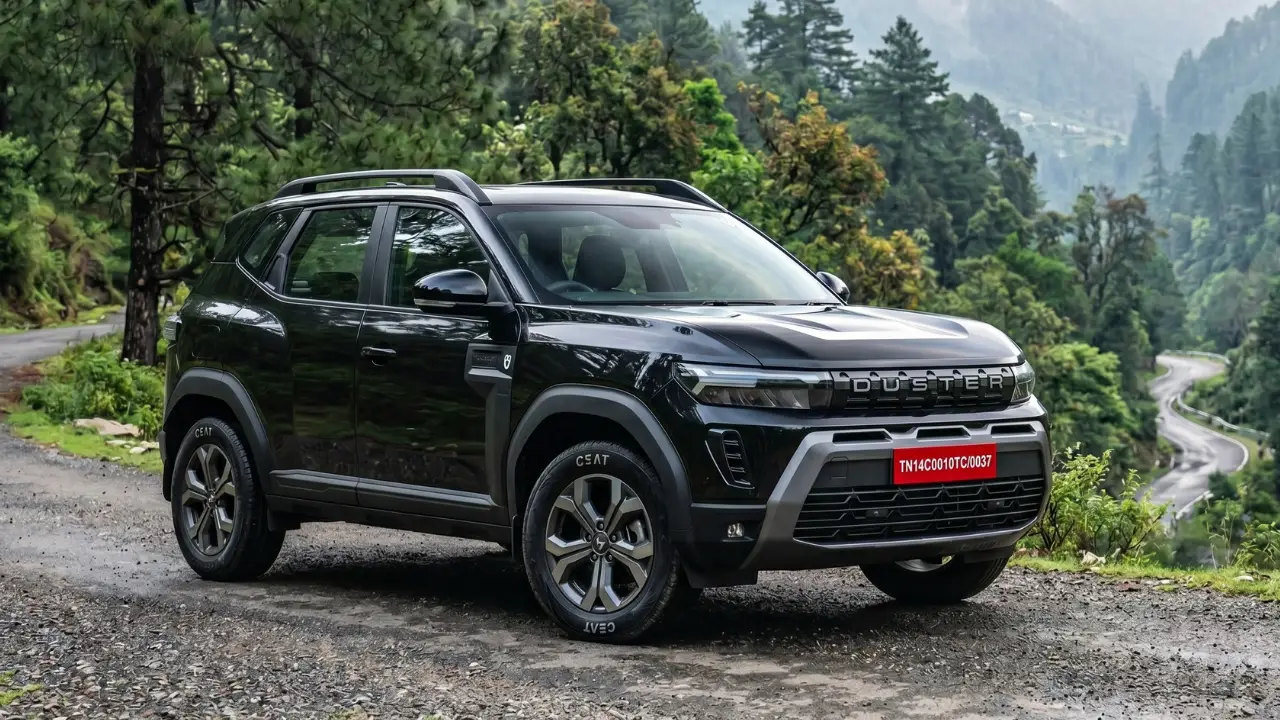
New Renault Duster Gen 3 (2026): Complete Guide to Price, Specs, Features and Why It Actually Deserves Your Attention
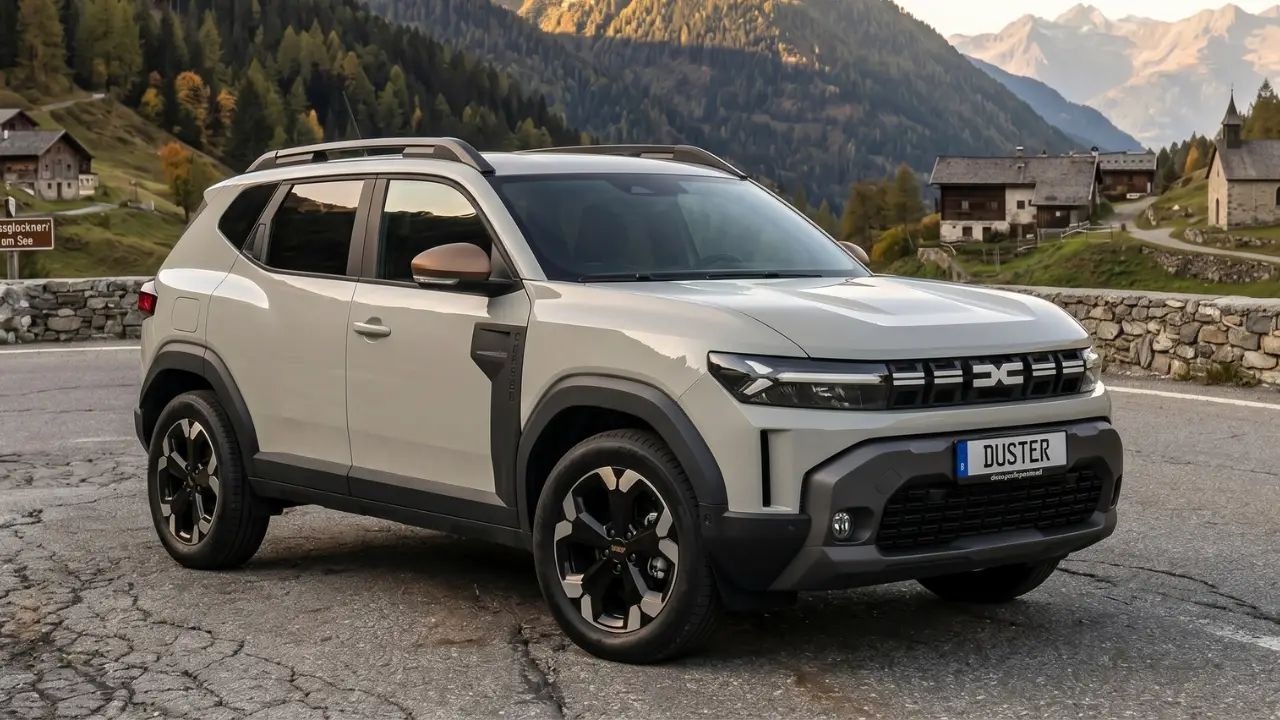
Let’s be honest. When Renault quietly pulled the old Duster off Indian shelves in 2022, most of us assumed that was it. Game over. Another brand that couldn’t hold its ground against the Creta-Seltos duopoly. So when Renault announced the Renault Duster Gen 3 for India, the initial reaction in most enthusiast circles was cautious. Not excited. Cautious. And then the spec sheet dropped, and things got interesting fast.
Launched on 17 March 2026, the Gen 3 Duster is not a lazy comeback. It is a properly thought-out product with a genuinely punchy 1.3-litre turbo motor, 212 mm of ground clearance (try finding that in a Creta), a 5-star Bharat NCAP rating, and prices starting at ₹10.49 lakh. VFM? Absolutely. But there is more to it than just ticking boxes.
Why the Duster’s Return Actually Matters
The compact SUV segment in India is brutal right now. Creta dominates every monthly sales chart. Seltos is right behind it. And most alternatives either lack features, lack power, or lack the badge value that Indian buyers care about deeply.
What Renault is doing here is smart. They are not trying to beat Hyundai at its own game. Instead, the Gen 3 Duster is targeting a specific kind of buyer: someone who drives a lot, who goes on highway runs, who hates scraping the underbelly on nasty potholes, and who wants the car to feel alive when they push it.
Whether it actually delivers on that promise, we will get into that.
Engine Lineup: Which One Should You Pick?
Three powertrain options. Two available now, one arriving later.
The 1.0-litre TCe 100 is the entry point. Roughly 100 PS, 166 Nm, 6-speed manual only. Paired with a tight budget and urban driving, it does the job. But on a highway stretch? You will feel its limits quickly. Not bad. Just not what this car is built around.
Now the one that matters: the 1.3-litre TCe 160. 160 PS. And here is the number that stands out: 280 Nm of torque. In a segment where most turbo-petrols max out at 250-253 Nm, that extra grunt is noticeable. Available in a 6-speed manual and a wet-clutch DCT, early first-drive reports from Indian media have called it linear, refined, and genuinely fun on twisty roads. The manual version especially has been getting praise for its driving character, which is a rare thing to say about an SUV in this price range.
ARAI figures are 17.75 kmpl (manual) and 18.45 kmpl (DCT). Real-world? Expect lower if you are using that 280 Nm like it deserves to be used.
The 1.8-litre E-Tech strong hybrid is coming around Diwali 2026. Combined output of around 160 PS, a 1.4 kWh battery, and Renault’s claim is up to 80% electric operation in city conditions. Pre-bookings apparently sold out in the initial phase. If fuel efficiency is your primary concern, waiting makes sense. If you enjoy driving, the 1.3T is ready right now and worth it.
Also Read: New Tata Tiago EV Facelift 2026: Complete Guide to Specs, Price, Features & Should You Wait?
Features: What You Actually Get
Higher trims are well loaded, no argument there.
You get a dual-screen setup: a 10.1-inch infotainment display with wireless Android Auto and Apple CarPlay alongside a 10.25-inch digital instrument cluster. Panoramic sunroof. 360-degree camera with a 3D view. Ventilated front seats. Dual-zone climate control. Wireless charging. 48-colour ambient lighting. Powered tailgate on top variants.
Level 2 ADAS with 17 features including Adaptive Cruise Control, Lane Keep Assist, and Traffic Sign Recognition. That is competitive with what Creta and Seltos offer in their upper trims.
In my view, the panoramic sunroof and the 360-degree camera are the two features Indian buyers will use and appreciate the most day-to-day. The rest is good to have, but those two genuinely improve the ownership experience.
Safety: This Is Where It Gets Serious
30.49 out of 32 for adult occupant protection. 45 out of 49 for child occupant protection under Bharat NCAP. That is a 5-star result and not a weak one.
Six airbags, ESC, ABS with EBD, ISOFIX mounts. The structural integrity praise in early assessments is consistent. For families driving on monsoon-ravaged roads where accidents do happen, this is not a small thing. It is arguably the most important reason to consider the Duster seriously.
Dimensions, Ground Clearance and Boot Space
Length is 4346 mm. Wheelbase at 2657 mm is decent. But the number that will win hearts in India is the 212 mm of ground clearance. Speed breakers, flooded patches, kaccha roads near the highway dhabas, broken service lanes. The Duster handles all of that with more confidence than most rivals.
Boot space at 518 litres (expandable to roughly 700 litres with the rear seats folded) is class-leading. Creta manages 433 litres. That gap is meaningful if you travel with luggage regularly or do family road trips.
Four adults will sit very comfortably. Five adults on a long drive is manageable but tight in the rear, which is a fair limitation for the class.
How the Renault Duster Gen 3 Stacks Up Against the Competition
Let’s look at the numbers directly against the two most common alternatives buyers are comparing this against:
| Parameter | Renault Duster Gen 3 | Hyundai Creta | Kia Seltos |
|---|---|---|---|
| Starting price | ₹10.49 lakh | ~₹11.0 lakh | ~₹10.9 lakh |
| Ground clearance | 212 mm | ~200 mm | ~190 mm |
| Peak torque (top petrol) | 280 Nm | 253 Nm | 253 Nm |
| Boot space | 518 L | 433 L | 433 L |
| Safety rating | 5-star Bharat NCAP | 5-star Global NCAP | 5-star Global NCAP |
| Level 2 ADAS | Yes (17 features) | Yes | Yes |
| Panoramic sunroof | Yes | Yes | Yes |
| Strong hybrid | Coming Diwali 2026 | Available now | Available now |
| Service network | Limited | Extensive | Extensive |
Against the Creta and Seltos, the Duster wins clearly on ground clearance, torque, and boot space. The Koreans counter with deeper dealer networks, stronger resale value, and a hybrid range that is already on sale. If you live in a Tier 2 or Tier 3 city with limited Renault service presence, that is a real concern worth sitting with.
Against the Honda Elevate, the Duster brings more power and a more butch road presence. Elevate buyers tend to prioritize long-term reliability, which is a valid priority too. Against the Skoda Kushaq and VW Taigun, the Duster offers better equipment density at comparable prices. Build quality perception still favours the Germans though.
The service network is the most honest concern with the Duster. Outside a major metro, Renault’s reach is limited. That is a real ownership factor, not a hypothetical one.
Also Read: Hyundai Creta EV: The Complete Guide to India’s Most Practical Electric SUV (2026 Update)
Should You Wait for the Hybrid?
Many buyers are sitting on the fence for the E-Tech. Honestly, if you do mostly city driving in stop-go traffic, waiting makes sense. The claimed 80% electric city operation sounds genuinely useful for Kolkata or Mumbai commutes.
But if you clock highway kilometres regularly and enjoy the act of driving, the 1.3T is a strong case for buying now. The hybrid will also carry a price premium when it arrives. Around 91% of pre-bookings reportedly went to turbo-petrol variants, which tells you what most buyers on the ground are actually choosing.
On-road prices in cities like Kolkata or Delhi typically land between ₹1.5 and ₹2.5 lakh above ex-showroom. The Evolution TCe 160 MT at ₹12.99 lakh ex-showroom works out to around ₹15 to ₹15.5 lakh on-road in most metros. That is solid VFM for what you are getting.
Who Is This Car Actually For?
Strong yes if you drive on highways or rough roads regularly, want a commanding driving position with proper ground clearance, or need safety credentials that hold up for the family. Also a yes if you simply want something that does not look like every third SUV on the road.
Think twice if you need the widest possible service network across India, require a diesel for high-mileage driving, or prioritize resale value above everything else. Renault’s historical resale numbers in India have lagged behind Korean brands. That is a fair point for practical buyers.
Final Verdict
The Renault Duster Gen 3 is one of the more credible SUV launches India has seen in recent years. Not perfect. The service network concern is real. No diesel hurts high-mileage buyers. But where it does well, it does really well. The 1.3T engine is the highlight of the lineup, easily the most characterful motor in this price bracket. The 212 mm ground clearance is genuinely useful on monsoon-ravaged Indian roads. The safety rating is not faked. And the pricing is aggressive enough to make the shortlisting conversation easy.
In my books, a solid 8.5 out of 10 for now. With the hybrid arriving and real-world ownership data building up, it has every chance to go higher. If you want an SUV that actually drives like a driver’s car and handles whatever broken road this country throws at it, the Duster Gen 3 is worth a serious test drive before you sign anything.
So tell me: are you leaning toward picking up the 1.3T manual right now, or are you the kind of buyer who will hold out until the E-Tech hybrid lands closer to Diwali?
SEO Tags: Renault Duster Gen 3, Renault Duster 2026, Renault Duster Gen 3 price India, Renault Duster Gen 3 review, Renault Duster Gen 3 specs, Renault Duster 1.3 turbo, new Duster India launch 2026, Renault Duster vs Hyundai Creta, Renault Duster vs Kia Seltos, Renault Duster Bharat NCAP 5 star, Renault Duster E-Tech hybrid, Renault Duster ground clearance, Renault Duster boot space, Duster TCe 160, Duster on-road price Kolkata, best turbo petrol SUV India 2026, Renault Duster Gen 3 features, midsize SUV India 2026, VFM SUV India, Renault Duster driving review