Next-Generation Hyundai Bayon: Bigger Than Anyone Expected, and It’s Coming for the Venue-Creta Sweet Spot
Honestly, nobody had this on their radar. Everyone was tracking the next-generation Hyundai Bayon as just another sub-4-metre crossover to fight the Fronx and Taisor. Safe bet, boring play. Then Hyundai’s own MD and CEO Tarun Garg walked into the Q4 FY2026 earnings call on May 8 and unexpectedly changed the positioning conversation around the car. This car is crossing 4 metres. It’s a proper mid-size SUV now. And suddenly, a lot of buying decisions in the Rs. 12 to 18 lakh bracket just got more complicated.
How Did the Next-Generation Hyundai Bayon Go From Compact to Mid-Size?
Simple answer: Hyundai read the room.
Tarun Garg confirmed during the earnings call that the upcoming ICE-powered model, internally coded BC4i and based on the global Bayon platform, will be approximately 4.18 metres long. That’s not compact crossover territory anymore. That’s right between the Venue at 3.99 metres and the Creta at 4.33 metres, which is exactly where Hyundai’s lineup has had a gap for years.
This wasn’t a last-minute decision. It was a calculated move, and from a market strategy standpoint, it actually makes a lot of sense when you look at what buyers in that bracket have been asking for.
The Design Is Finally Doing Some Heavy Lifting
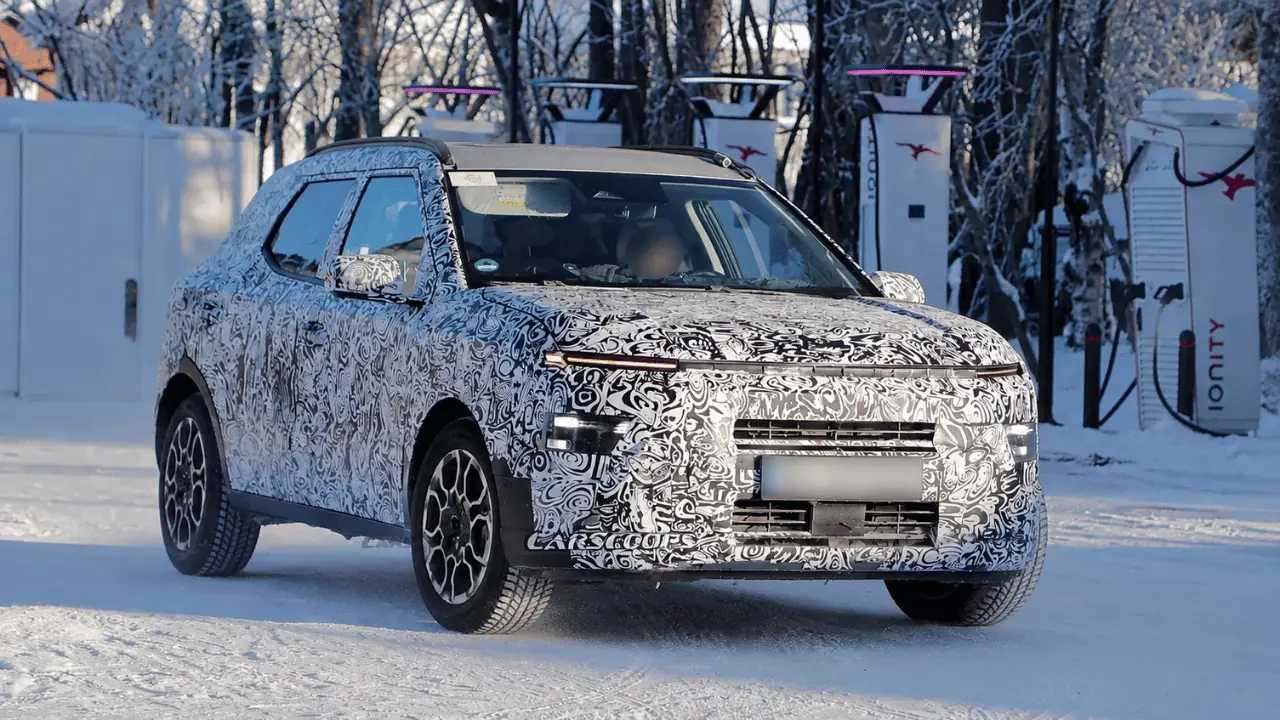
If you’ve seen the spy shots floating around, the first thing you notice is the stance. It’s not that “raised hatchback” look the old Bayon had. This one is boxy and upright with squared-off wheel arches that give it some actual road presence. The roofline is flatter, there are roof rails, and the body cladding is chunky in all the right places. It looks like a mini-SUV now, not an inflated hatchback.
The front end is pure Venue vibes, with that seamless LED bar running across the hood and vertical headlamps sitting below it. It looks sharp in person, from what the spy shots show.
There’s also an N Line variant being tested, with sportier bumpers, black accents, red stitching inside, and all-disc brakes. That one’s going to be popular with younger buyers who want their SUV to look a little mean.
Next-Generation Hyundai Bayon Engine: The Turbo-Petrol Is Fine, But the CNG Is the Real Story
The main engine for India is a new 1.2-litre turbo-petrol motor. It’s hybrid-ready too, which is a smart call for the future. You’ll also get naturally aspirated petrol options in the lower variants.
Now, about diesel. There isn’t one. For high-mileage highway drivers or folks doing long intercity runs regularly, that’s going to sting a bit. Hyundai is clearly betting everything on the turbo-petrol and CNG combo here, and while that works for most city buyers, it’s a choice that will put off some buyers.
But here’s the thing: the CNG setup on this car is genuinely different.
This is the first time Hyundai is putting CNG in a car longer than 4 metres. And instead of one big tank eating your boot space, they’re using a dual-cylinder setup, two smaller tanks that fit more efficiently. So you get the fuel savings without losing your luggage space every time you go for a long drive. For city commuters, that’s a massive practical win that nobody else in this segment is offering right now.
Inside the Cabin: It’s a Real Step Up
The interior is where the next-generation Hyundai Bayon tries to justify that mid-size price tag, and from what we know, it’s delivering.
You’re getting dual large screens in the 10.25-inch range. Level 2 ADAS is in there too, which, let’s be honest, everyone is starting to expect at this price point now. The 360-degree camera is a lifesaver in tight city parking, especially in Indian cities where parking is basically a contact sport. Throw in wireless charging, ambient lighting, and better cabin materials, and it genuinely feels like a step above the current Venue.
It needs to, because that’s exactly what Hyundai is asking you to pay more for.
Also Read: Honda NX500 E-Clutch Launched: India’s Most Practical New Adventure Bike Is Finally Here
Next-Generation Hyundai Bayon Price in India: What Are We Looking At?
Because it crosses 4 metres, the sub-4m tax advantage is gone. So the expected price range is Rs. 10 lakh to Rs. 18 lakh (ex-showroom). Entry variants will overlap with Venue top-ends. Higher trims will brush up against base Creta pricing.
On-road prices will vary by city, but expect the starting on-road figure to land around Rs. 11 to 12 lakh in most metros once you add taxes and insurance.
Is it cheap? No. Is it paisa vasool if priced right? It genuinely can be, especially with that CNG option bringing running costs down significantly over time.
Where It Sits in the Market: Venue vs Bayon vs Creta
At 4.18 metres, the Bayon fits cleanly between the Venue and Creta. Pricing overlaps with both on purpose. Hyundai is going after buyers who find the Venue a bit cramped but don’t want to stretch all the way to full Creta money.
The CNG play is the real differentiator here. The Creta doesn’t offer it. Most rivals in this segment don’t offer it at this size. If Hyundai prices the CNG variant smartly, it could easily become the default pick for practical family buyers in metro cities.
Who Should Actually Be Looking at This Car?
If you’re someone who is currently stuck between a Venue top-end and a base Creta and neither feels quite right, this car is made for you. You get more space than a Venue, more features than a base Creta, and a CNG option that can realistically cut your monthly fuel bill by a meaningful amount.
Families in Tier-1 and Tier-2 cities looking for a proper-sized daily driver without crossing Rs. 16 to 17 lakh will find this hard to overlook. First-time SUV buyers who want genuine road presence without going full-size will feel at home here too.
When Is the Next-Generation Hyundai Bayon Launching in India?
The launch is targeting the second half of 2026, most likely the festive season window. Early 2027 is also possible depending on how production timelines play out. Official specs, final dimensions, and confirmed pricing are still pending from Hyundai.
Wrapping Up
The next-generation Hyundai Bayon turned out to be a much more interesting car than anyone expected six months ago. Bigger than assumed, smarter in its CNG approach, and positioned in a price bracket where genuine competition is still thin. If Hyundai gets the pricing right on launch, this could be one of the stronger SUV buys of 2026 in that Rs. 12 to 16 lakh range.
One thing to watch is how buyers react once they see it parked next to a base Creta at the showroom. That comparison is going to make or break the decision for a lot of people.
So, are you considering waiting for the Bayon, or is the Creta still the safer pick for your budget?
Frequently Asked Questions
What is the next-generation Hyundai Bayon price in India?
The estimated ex-showroom price range is Rs. 10 lakh to Rs. 18 lakh. Hyundai hasn’t officially confirmed this yet, but based on the size and positioning, this range makes the most sense.
What is the next-generation Hyundai Bayon launch date in India?
The most realistic window is the festive season in late 2026. Early 2027 is also being tracked as a possible timeline.
What is the on-road price of the next-generation Hyundai Bayon?
On-road pricing depends on city taxes and insurance. Expect starting on-road prices around Rs. 11 to 12 lakh in most Indian metros.
How long is the next-generation Hyundai Bayon?
Hyundai has confirmed it crosses 4 metres. Reports put the length at approximately 4.18 metres.
Will the next-generation Hyundai Bayon get CNG?
Yes, and it’s a dual-cylinder setup, which means minimal impact on boot space. This is the first time Hyundai is offering CNG in a car over 4 metres long.
Does the next-generation Hyundai Bayon have diesel?
No diesel variant is planned for India. Hyundai is going with turbo-petrol and CNG for this one.