TVS Ntorq 150 Honest Review: Real-World Test After 3 Weeks of City and Highway Riding
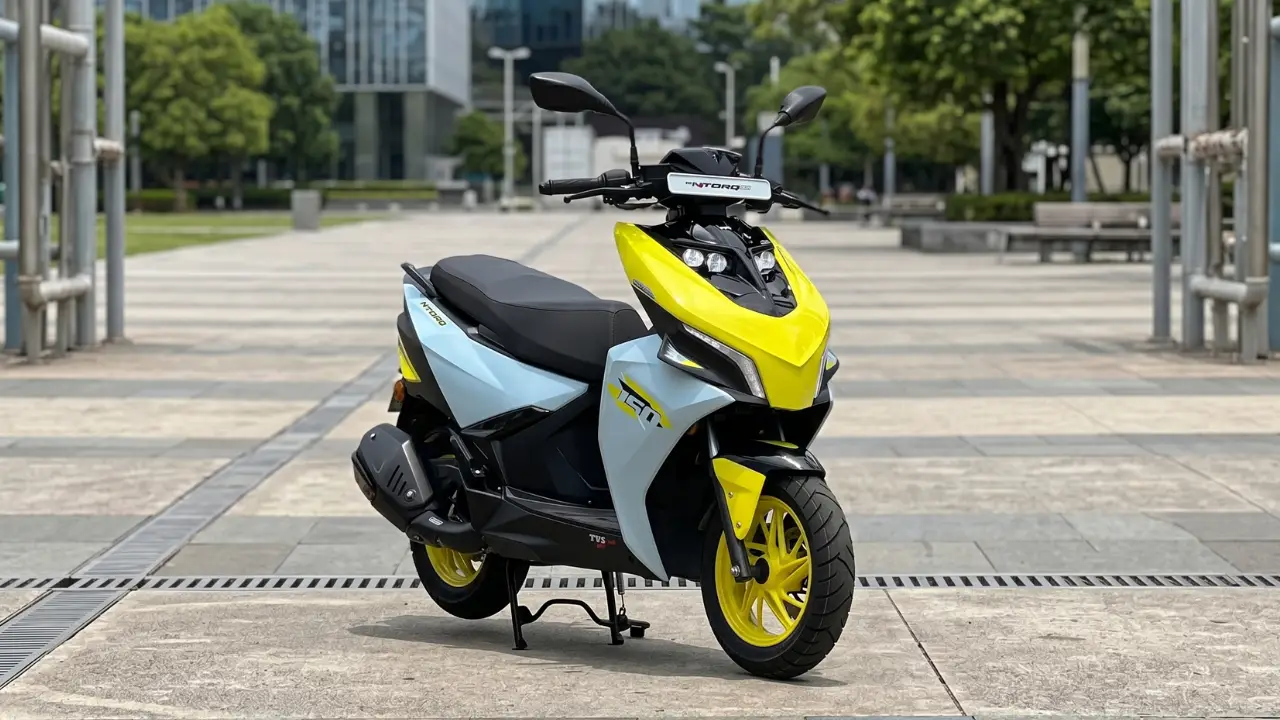
So TVS finally went ahead and did it. The Ntorq 125 had a solid fan base, but riders were always asking the same thing at dealerships: “Bhai, 150cc kab aayega?” Well, it’s here. The TVS Ntorq 150 launched in September 2025, and by mid-2026 enough units are out on the road to separate the spec-sheet promises from actual riding experience. I’ve been putting this scooter through the grind for the past few weeks, and here’s what I found.
Does the TVS Ntorq 150 Actually Feel Faster in Real Life?
Short answer: yes. Noticeably.
The 149.7 cc, 3-valve, fuel-injected engine puts out 13.2 PS and 14.2 Nm of torque, with the iGO electric assist system chipping in during low-speed pulls. That last part matters more than most people expect.
On the ground, the iGO assist changes how the scooter behaves in stop-go traffic. At a crowded signal, when you crack the throttle, there’s no hesitation, no surging, no lag. It just moves. I was genuinely surprised the first time I used it during peak-hour traffic near a busy market road. The scooter rolled forward almost silently and then picked up cleanly without any jerk. That’s the electric assist doing its job.
0 to 60 km/h in 6.3 seconds. That’s quick enough to beat most bikes off the line at a signal. Top speed sits at 104 km/h, and it holds that without feeling strained. The two riding modes make a real difference too. Street mode is your daily commute setting, smooth and efficient. Race mode sharpens the throttle and you feel it in your wrist immediately.
Real-world mileage came in around 37-40 kmpl in my mostly city riding, which matches the claimed ~40 kmpl ARAI figure reasonably well. Aggressive Race mode riding will pull that down closer to 32-34 kmpl, so keep that in mind.
City Riding: Where This Scooter Shines
At 115 kg, this thing feels light on its feet. Genuinely light. Flicking it through tight gaps in peak-hour traffic is easy, and that wide, naked handlebar gives you fast, direct steering when you need to dodge a pothole or cut a lane quickly.
Vibrations stay under control up to around 80 km/h. Above that, you feel a mild buzz through the handlebar and footboard. Nothing uncomfortable, but it’s there.
The 155 mm ground clearance handles most situations well. Speed breakers, broken tarmac, the odd flooded patch during monsoon season — the Ntorq 150 gets through without scraping or drama.
Ride quality on solo is firm but acceptable. It’s tuned for sporty handling, not cushioned comfort, so don’t expect Activa-level softness. With a pillion on really broken road stretches, the rear suspension starts bottoming out more noticeably. That’s the trade-off you make with sporty scooter geometry.
Also Read: 2026 Mitsubishi Pajero Confirmed: The Legendary Off-Roader Is Finally Coming Back
Now, the Elephant in the Room: Those 12-Inch Wheels
The Yamaha Aerox 155 runs on 14-inch wheels. The Hero Xoom 160 has a 14-inch front. The TVS Ntorq 150 sticks with 12-inch wheels front and rear, same as the 125cc version.
Does it matter? Honestly, yes — but only at certain speeds and in certain situations.
On city roads, 12-inch wheels are absolutely fine. Nimble, responsive, no complaints. But the moment you push above 85-90 km/h on a highway, the smaller wheel diameter shows up. The Aerox feels more planted and confident at those speeds. The Ntorq 150 isn’t unstable, but it’s not as settled either.
For riders who mostly commute inside the city with the occasional 30-40 km highway stretch, this is not a dealbreaker. But if you’re planning regular highway runs of 60+ km at sustained speeds, factor this in before you sign the papers.
Now here’s the part that makes the wheel compromise easier to accept: the Ntorq 150 Standard starts at around ₹1.09-1.11 Lakh ex-showroom, and the TFT variant at ₹1.18-1.20 Lakh. The Aerox 155 costs roughly ₹1.50 Lakh ex-showroom. That’s a ₹30,000+ gap. For most city buyers, that difference buys a lot of petrol.
TVS Ntorq 150 Specs Summary
| Parameter | Details |
|---|---|
| Ex-Showroom Price | ₹1.09 – 1.20 Lakh |
| Engine | 149.7 cc, FI, 3-valve |
| Power | 13.2 PS @ 7,000 rpm |
| Torque | 14.2 Nm @ 5,500 rpm |
| Kerb Weight | 115 kg |
| Claimed Mileage | ~40 kmpl (ARAI) |
| Seat Height | 770 mm |
| Under-seat Storage | 22 litres |
| Top Speed | 104 km/h |
| Brakes | 220 mm disc front (ABS) + drum rear |
Tech, Storage, and the Stuff You’ll Actually Use Daily
The TFT display on the higher variant is genuinely impressive indoors or in shade. Under direct afternoon sun, it gets harder to read clearly unless you’ve maxed out the brightness. Not a dealbreaker, but don’t expect the clarity of a flagship smartphone screen in harsh light.
Bluetooth pairing with the SmartXonnect app works fine once you get past the initial setup. Turn-by-turn navigation and call alerts are functional. The Alexa integration is a nice party trick but honestly I used it maybe twice.
Storage: I tried fitting my standard full-face Vega helmet into the 22-litre underseat boot, and it just wouldn’t close. You’re working with half-face helmets here, full stop. There’s room for a small bag, your documents, maybe a water bottle. It’s workable for daily commuting but not generous. The front glovebox adds a couple of extra litres and has a USB charging point, which I used every single day for phone charging.
Seat height at 770 mm is comfortable for most Indian riders without any awkward tiptoeing, which is a small but genuine positive in everyday use.
Also Read: 2026 Toyota Innova Crysta Complete Guide: New Price, Features, and Everything You Need to Know
The Final Verdict on the TVS Ntorq 150
Buy this scooter if you’re a city commuter who wants something sporty, well-connected, and properly quick without spending ₹1.5 Lakh or more. The iGO system, light handling, and the TFT variant’s features make a genuinely strong case at the price.
Skip it if your daily ride involves 60+ km highway stretches where sustained speed stability matters. The 12-inch wheels and firmer ride are limitations that show up on the highway more than anywhere else. In that case, stretch the budget and look at the Aerox 155 or Xoom 160.
The TVS Ntorq 150 is not a scooter for everyone. But for the young urban rider who lives in traffic and wants something that actually stands out from the sea of Activas, it’s one of the most sensible choices in the 150cc segment right now.
Have you taken the Ntorq 150 for a test ride yet? Drop your experience in the comments. Especially curious if anyone’s done a long highway run on it.