2026 Mitsubishi Pajero Confirmed: The Legendary Off-Roader Is Finally Coming Back
I still remember seeing a Pajero SFX parked outside a Mitsubishi dealership in Karol Bagh back in 2007. Dual-tone white and silver. It looked like an absolute tank next to the Maruti 800s and Indicas around it. That memory hit hard when Mitsubishi officially confirmed the 2026 Mitsubishi Pajero is coming back as a full-size, body-on-frame SUV with a global debut scheduled for autumn 2026. Not a crossover with plastic cladding pretending to be tough. A real one.
And honestly? It has been a long five years without it.
Why It Matters: Heritage That Actually Means Something
The Pajero is not just a name Mitsubishi dusted off from a filing cabinet. This SUV won the Dakar Rally 12 times. Twelve. That kind of record does not happen with a marketing team; it happens with engineers who built something genuinely unbreakable.
The fourth-generation model ended production in early 2021 after an extraordinarily long run. Since then, Mitsubishi kept the “Pajero Sport” alive (which, let’s be clear, is a different, smaller product based on the Triton pickup). The proper full-size Pajero was gone.
Now it is back on the same Triton ladder-frame, but with model-specific suspension tuning and a dedicated cabin. That distinction matters. The Pajero’s identity was always about long-distance durability and genuine off-road ability, not city styling. Mitsubishi knows this. The new leadership has been vocal about getting the revival right rather than rushing it out.
Also Read: 2026 Toyota Innova Crysta Complete Guide: New Price, Features, and Everything You Need to Know
The Design and What Buyers Should Expect from the 2026 Mitsubishi Pajero
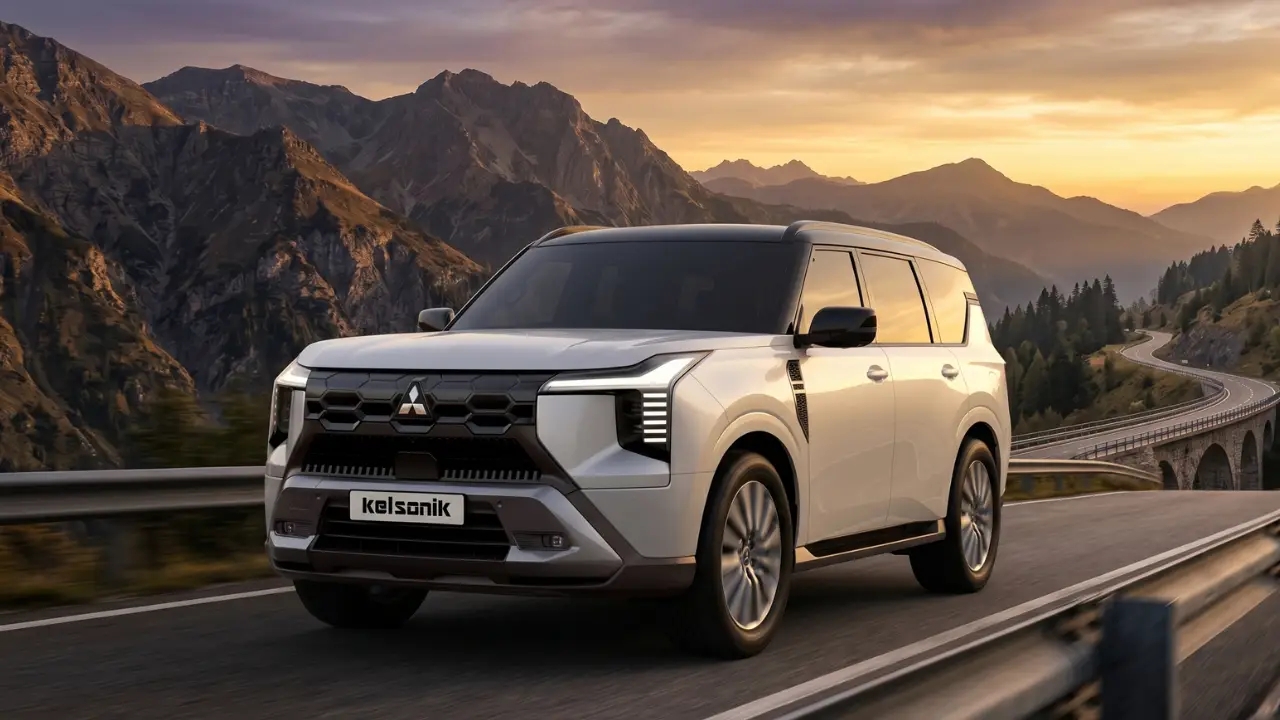
Spy shots and digital renders paint a clear picture. Boxy. Tall. Aggressive. The silhouette is closer to the Toyota Land Cruiser 250 than anything in Mitsubishi’s recent lineup, with a wide Dynamic Shield grille, T-shaped or Y-shaped LED headlights, and a full-width rear light bar (it will look massive in your rearview mirror, trust me).
Whether the renders land close to the production car, we will find out at the premiere. But from a buyer’s standpoint, the boxy design is genuinely practical. Better rear headroom. Cleaner off-road visibility. A taller greenhouse. This is not a compromised shape. It works.
One thing I will say: avoid getting too attached to any specific render. Professional artists like Nikita Chuyko from Kolesa.ru do great work, but production cars always look slightly tamer. That is just how it goes.
Platform and Capability Breakdown
Here is what the confirmed and strongly indicated specs look like right now:
| Aspect | Details |
|---|---|
| Platform | Ladder-frame, Mitsubishi Triton derived |
| Suspension | Model-specific tuning, front and rear |
| Base Engine | 2.4L bi-turbo diesel, 150 kW / 204 hp, 470 Nm |
| Transmission | 8-speed automatic (indicated) |
| 4WD System | Super Select II 4WD with low-range |
| Braked Towing | 3,500 kg |
| PHEV Option | Under development, Outlander PHEV architecture |
The Super Select II 4WD system is class-leading. Period. Nothing else in this segment gives you the same range of selectable modes for mixed-surface driving.
The platform has also reportedly been slightly shortened compared to the Triton for better break-over angles on technical terrain. That is a small but telling detail. It means Mitsubishi’s engineers are actually thinking about what this vehicle needs to do off-road, not just how it looks in a showroom.
For Indian conditions specifically, the 470 Nm of low-end torque from the bi-turbo diesel is the number that matters. That is what gets a loaded 7-seater up a steep Manali ghat without the driver breaking into a sweat.
The Indian Market Context and the 2026 Mitsubishi Pajero’s Position
Here is where things get real. Mitsubishi has no meaningful dealer network in India right now. That is the honest truth. They exited the mainstream market years ago, and rebuilding that infrastructure is not a six-month project.
If Mitsubishi imports the Pajero as a CBU (which, let’s be honest, they probably will initially just to test demand), pricing will realistically land somewhere between Rs. 55 lakh and Rs. 70 lakh depending on the variant. That puts it above the Fortuner Legender and close to the Land Cruiser Prado’s lower range.
The Fortuner still dominates because of one thing nobody talks about enough: resale value. Walk into any used car lot in Delhi or Hyderabad. A three-year-old Fortuner holds its value better than almost any other SUV in the segment. Mitsubishi cannot match that on day one. They will need two or three years of solid sales and service history in India before that changes.
Also Read: Suzuki XL7 Facelift Spied: Big Design Changes Are Coming Soon
The Isuzu MU-X is probably the closest comparison point for the Pajero in terms of ladder-frame positioning. The Ford Everest is not officially sold in India but is a useful benchmark for buyers who research internationally. Against all of them, the Pajero’s off-road pedigree is stronger on paper. The real-world question is whether Mitsubishi shows up with the after-sales support to back it up.
The Buyer’s Verdict on the 2026 Mitsubishi Pajero
The 2026 Mitsubishi Pajero is the most exciting ladder-frame SUV announcement in years. The platform is solid. The capability numbers are real. The design direction shows a brand taking its own heritage seriously for once.
But if you are sitting on the fence between this and a Fortuner right now, do not cancel that booking yet. Wait for the autumn premiere. Watch what Mitsubishi announces for market rollout and pricing. If they commit to a proper India plan with genuine dealer and service infrastructure, this becomes a very real alternative for premium SUV buyers.
If they go CBU-only with three dealers in the whole country, it stays a niche purchase for hardcore enthusiasts who already know what they are signing up for.
The legend is genuinely back. Whether it makes practical sense for an Indian buyer in 2026 depends entirely on how serious Mitsubishi is about doing this right.
So here is what I want to know: if the new Mitsubishi Pajero landed in India with solid after-sales support and was priced around Rs. 60 lakh, would you seriously consider it over a Toyota Fortuner, or does the resale value risk still put you off?