New Tata Punch EV 2026: Complete Guide to India’s Best Value Electric SUV
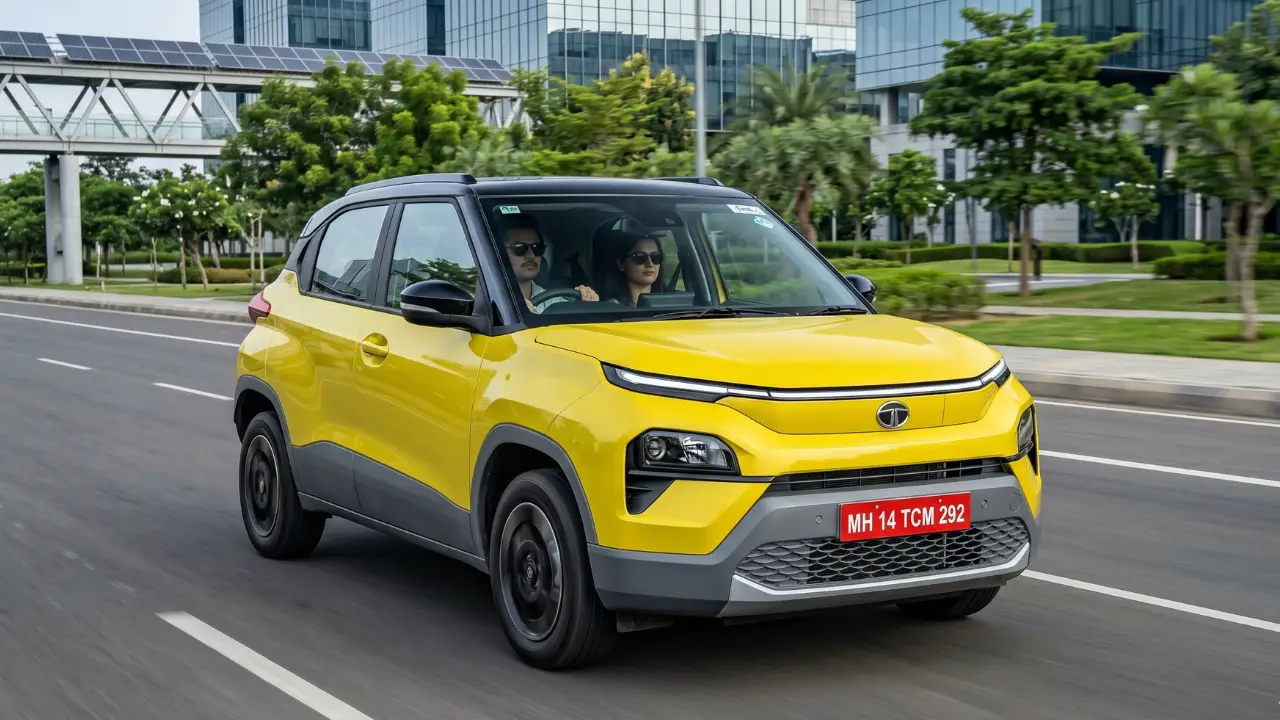
I talk to a lot of people who want to switch to an EV, but the conversation always ends the same way: “Too expensive yaar” or “What if the battery dies on the highway?” The 2026 Tata Punch EV facelift, launched in February this year, finally kills both those excuses. Better range, lower price, and features that honestly have no business being in this budget. Let me break it all down.
What Actually Changed With the 2026 Facelift
The original Punch EV sold well, but range was a genuine concern. Tata heard that. The facelift brings two LFP prismatic cell battery options.
The 30 kWh pack gives an ARAI-certified range of 365 km. Real world? Expect around 260 to 275 km. The 40 kWh pack claims 468 km certified range. Realistically? About 355 km. But here is the thing: that is still plenty for most Indian buyers doing 40 to 60 km a day in the city.
Even the smaller battery gives you close to a week of commuting on one charge. That is not a spec sheet number. That is actual, usable range.
On the outside, you get redesigned bumpers, new alloy wheels, connected LED tail lamps, and 195 mm ground clearance with 400 mm water wading depth. Nothing revolutionary, but the car looks sharper than before.
Tata Punch EV Features: Better Than It Has Any Right to Be
Sit inside the top variants and you forget you are in a sub-₹13 lakh car. Dual 10.25-inch screens for infotainment and the instrument cluster, ventilated front seats, cooled glovebox, air purifier, and a voice-assisted sunroof. That is premium territory at a mid-range price.
Safety is solid across the board. Six airbags, ESP, iTPMS, ISOFIX, and SOS calling are standard. Move to higher trims and you get a 360-degree surround-view camera, cruise control, and hill descent control.
Tata packed the iRA.ev suite with over 60 connected features including smartwatch integration and the Arcade.ev app platform. You will find similar tech in cars priced ₹3 to 5 lakh higher. That gap has basically closed now.
The single biggest feature addition though? Lifetime HV battery warranty on the 40 kWh pack. 15 years or unlimited kilometres for the first private owner. For anyone still nervous about EV battery health, this is a direct answer. No more “but what if the battery degrades” conversations.
Performance and Charging: How It Feels Day to Day
The 30 kWh variants make 87 bhp and 154 Nm. Enough for city use, nothing more. The 40 kWh variant steps up to 127 bhp with the same 154 Nm torque, doing 0 to 100 km/h in 9 seconds. Not fast by sports car standards, but the instant torque from a standstill makes city driving genuinely enjoyable.
Drive modes are City, Eco, and Sport, with up to 12 combinations when you factor in regen levels. Paddle shifters for regen braking come from the Smart+ 40 variant upward. Small detail, but it makes the car feel more engaging.
Charging is where the 40 kWh pack really earns its keep. DC fast charging at 65 kW takes it from 20 to 80 percent in roughly 26 minutes. That is about 135 km of real-world range in a 15-minute highway stop. Home charging on 7.2 kW covers a full charge in 4.5 to 5.3 hours. For most people, you just plug in overnight and wake up to a full battery.
Running costs are where the math gets interesting. Home charging works out to about ₹1 to ₹1.5 per km. A petrol car in the same class costs ₹4 to ₹6 per km. Do that math over 3 to 4 years of ownership and the savings are very real.
Tata Punch EV Price and Variants (2026)
Here is the full variant lineup with introductory ex-showroom pricing:
| Variant | Battery | Ex-Showroom Price |
|---|---|---|
| Smart | 30 kWh | ₹9.69 lakh |
| Smart+ | 30 kWh | ₹10.29 lakh |
| Smart+ | 40 kWh | ₹10.89 lakh |
| Adventure | 40 kWh | ~₹11.59 lakh |
| Empowered | 40 kWh | ~₹12.29 lakh |
| Empowered+ S | 40 kWh | ₹12.59 lakh |
Now let us talk about the real game-changer: BaaS (Battery-as-a-Service). This option drops the entry price to ₹6.49 lakh with a ₹2.6 per km usage charge. That makes the Punch EV cheaper upfront than most base-model petrol hatchbacks. Tata also offers assured buyback options under this plan, so the exit is clear if your situation changes.
How the Tata Punch EV Compares With Rivals
The Citroën eC3 is probably the closest competitor in terms of size and concept, priced at ₹12.9 to ₹13.4 lakh. The Punch EV undercuts it on price, beats it on features, and charges faster. Not a close fight, honestly.
The Tata Nexon EV (₹12.49 to ₹17.49 lakh) is the obvious comparison within Tata’s own lineup. The Nexon gives you a bigger cabin, up to 489 km certified range, and more premium positioning. If you regularly do highway runs, the Nexon makes sense. For pure city use, the Punch EV at a lower price is the smarter call.
The Tata Tiago EV (₹7.99 to ₹11.14 lakh) is cheaper, but it gives up SUV proportions, range, and boot space. If you can stretch to Punch EV territory, the upgrade is worth it.
MG Windsor EV and Mahindra XUV 3XO EV are ₹3 to 5 lakh more expensive. Bigger cars with longer range, yes. But the Punch EV delivers strong value at its price, and that is what most buyers in this segment are actually shopping for.
Also Read: Ferrari Luce: Ferrari’s First Electric Car Is Here, and It’s… a Lot to Process
Who Should Actually Buy the Tata Punch EV
First-time car buyers make up about 21 percent of early Punch EV customers, which tells you something. This car is approachable. It looks familiar (the ICE Punch is everywhere), it is simple to live with, and Tata’s service network is genuinely widespread.
If you are a daily city commuter driving 30 to 80 km a day, this is close to an ideal match. The real-world range covers your week, home charging handles the rest. Weekend trips with four people work fine. Just do not expect the rear seat to comfortably fit three adults on a long drive.
Fleet operators will love the running costs. ₹1 to ₹1.5 per km versus petrol is a meaningful difference when you multiply it across thousands of kilometres a month.
The one requirement is home charging access. If you live in an apartment with no dedicated parking, this gets complicated. But if you have a garage or assigned parking spot with a power outlet, even a basic 15-amp socket gets you started.
Why This Car Matters Beyond the Specs
India’s EVs sit at about 4 percent of total passenger vehicle sales in FY2026. In the sub-₹13 lakh segment that accounts for 65 percent of all car sales, EV penetration is just around 1.5 percent. That is the exact gap Tata is targeting.
Post-facelift sales numbers tell the story: 2,871 units in March 2026, up 171 percent month-on-month. That is a product that found its market.
Tata has crossed 3 lakh cumulative EV sales total. The Punch EV, alongside the Nexon and Tiago, is a big reason for that. And every unit sold builds the charging ecosystem, the service familiarity, and the general comfort with EVs among Indian buyers.
Final Take
No car is perfect. The rear seat is still a bit tight for three adults. Highway range drops in heat with the AC running hard. Public charging infrastructure outside metros is still inconsistent.
But at ₹9.69 lakh for the Smart 30 (or ₹6.49 lakh with BaaS), you are getting a feature-loaded SUV with a lifetime battery warranty option that costs almost nothing to run daily. The Empowered+ S 40 at ₹12.59 lakh is genuinely hard to beat in this segment for overall value.
If you are doing regular city commutes and have home charging access, you would honestly be crazy not to at least go for a test drive before deciding. The 2026 Tata Punch EV is the kind of EV that converts fence-sitters, and that is exactly what India’s EV market needs right now.
Are you leaning towards the 30 kWh variant to save money upfront, or does the lifetime battery warranty on the 40 kWh pack make it worth spending the extra ₹1.2 lakh?