New Hyundai Ioniq 5 Facelift 2026: Complete Guide to India’s Best Long-Range Premium EV
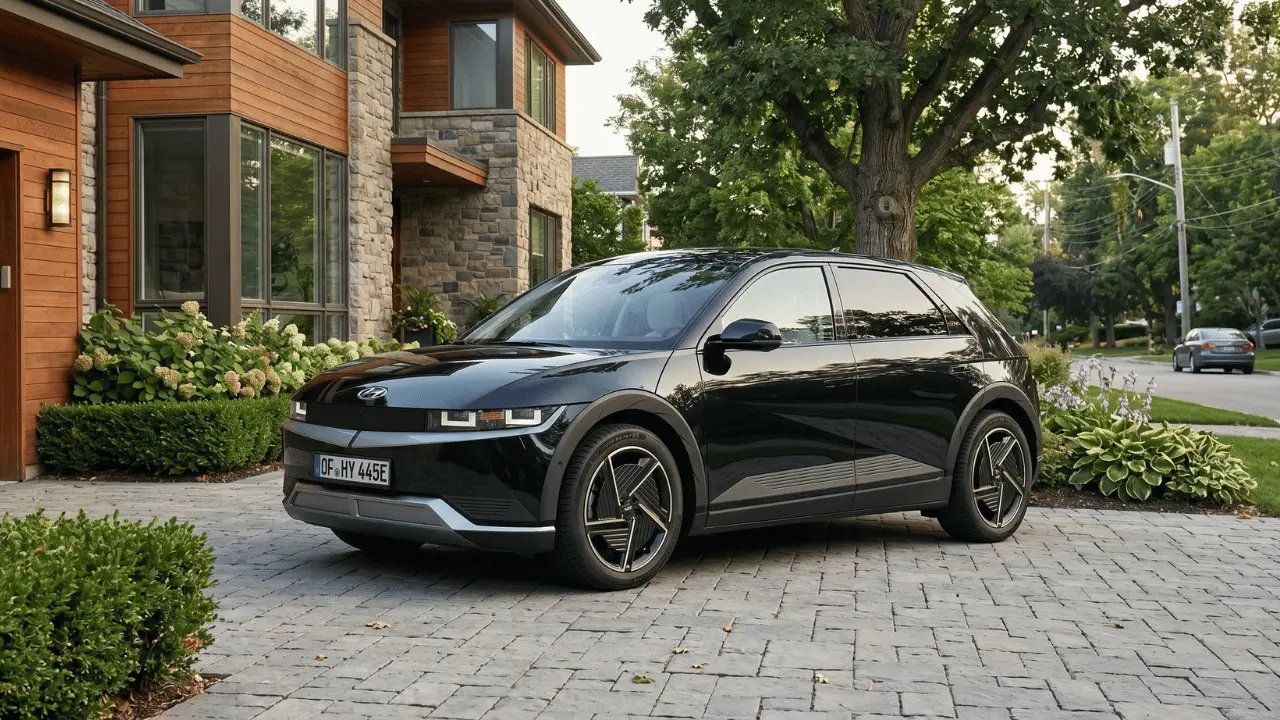
Five years in, the Ioniq 5 still gets stares on Indian roads. Most facelifts are just a new front bumper and some extra chrome added. The Hyundai Ioniq 5 Facelift is not that. Launched in India on April 28, 2026, this 2026 update brings a proper battery upgrade, a reworked cabin, and a ₹55.70 lakh price tag that is going to start a lot of arguments in WhatsApp groups.
So, What Is Actually New?
Hyundai was smart enough not to touch the design too aggressively. The pixel LED headlights, the flush door handles, the boxy retro-futuristic silhouette — all of it stays. Good call. That is still the main reason people walk into the showroom.
What they did change is the details. The front bumper is wider now, with a cleaner V-shaped garnish and a bigger air intake. New 20-inch aero alloys give it a slightly more planted look, and the rear gets silver cladding along with an updated spoiler. Small tweaks, but they tighten up the overall package nicely.
The interior is where the changes feel more significant day to day. The old dual-tone colour schemes looked great in photos, but anyone who owned the previous car knows how quickly the lighter upholstery started looking tired. The new all-black Obsidian theme is the right call. It looks premium, it hides wear, and the cabin feels more serious for it.
Hyundai also brought back more physical buttons on the centre console for seat ventilation and climate controls. Whoever decided that was a problem worth fixing deserves a raise. The repositioned wireless charger actually makes sense now, and the cupholders finally feel like they were designed for Indian roads and not a quiet German autobahn.
The 3-spoke flat-bottom steering wheel with the illuminated logo looks sharp. Wireless Android Auto and Apple CarPlay work through the 12.3-inch dual-screen system. OTA updates are supported, which means the car keeps improving after you drive it off the lot.
Key Specifications
| Specification | Detail |
|---|---|
| Price (ex-showroom) | ₹55.70 lakh |
| Battery Capacity | 84 kWh |
| Claimed Range (ARAI) | 690 km |
| Power | 228.5 PS / 350 Nm |
| Drivetrain | Rear-Wheel Drive |
| DC Fast Charging (10-80%) | 18 minutes (350 kW charger) |
| AC Home Charging | Up to 11 kW |
| V2L Output | 3.6 kW |
| Battery Warranty | 8 years / 1,60,000 km |
The 84 kWh Battery: Finally Fixing the One Real Problem
The previous Ioniq 5 was a good car. But the 72.6 kWh battery and roughly 450 km of real-world range meant that on a proper highway trip, you were always doing mental math about charging stops. That low-grade anxiety is exactly what kills the premium EV experience.
The 84 kWh battery in the facelift changes that calculation. Hyundai’s ARAI-certified number is 690 km, which is obviously the best-case scenario. In the real world, with AC running and some highway speeds thrown in, you are looking at 500 to 550 km. That is a genuine jump. Delhi to Agra and back without a charging stop. Bengaluru to Mysuru and beyond without nervously watching the battery indicator.
The 800V architecture handles a 350 kW DC fast charger and gets you from 10 to 80 percent in around 18 minutes. Realistically, most people will use the 11 kW AC home charger that Hyundai actually includes with the car (along with a 2.8 kW unit). Overnight charging sorted.
V2L (Vehicle-to-Load) at 3.6 kW is worth mentioning specifically in the Indian context. Running a fan, a laptop, or a small appliance from your car battery during a power cut is not some quirky feature here. It is genuinely useful. Especially during monsoon season when outages get unpredictable.
Also read: New VinFast VF MPV 7 Complete Guide: Best Electric 7-Seater Under ₹25 Lakh in India (2026)
ADAS and Safety: 22 Features and Two Useful New Ones
The SmartSense ADAS package now covers 22 features including Forward Collision Avoidance with junction detection, Blind-Spot View Monitor, Lane Keeping Assist, and Remote Smart Parking Assist 2.
Two additions in the facelift are worth calling out: Rear Parking Collision-Avoidance Assist and Side Parking Distance Warning. These are not headline-grabbing features, but they are the kind of thing you end up using every single day in a tight Mumbai parking lot or a crowded Delhi market.
6 airbags, 360-degree camera, TPMS, ESC standard across the board. The safety kit is properly solid.
The Price Jump: ₹9.40 Lakh Is a Hard Conversation
This is the part where the article cannot sugarcoat things. The Ioniq 5 Facelift is priced at ₹55.70 lakh ex-showroom. The previous model launched at ₹46.30 lakh. That is a ₹9.40 lakh hike for the refresh.
For buyers who were circling the pre-facelift model during the heavy discount period (some deals were going below ₹44 lakh), this new price will sting. There is no way around it.
The honest answer is that the bigger battery, the upgraded interior, the added safety features, and the improved tech do account for most of that increase. Hyundai is also throwing in two home chargers (2.8 kW and 11 kW) and a Bluelink subscription. The 8-year/1,60,000 km battery warranty is class-leading and provides genuine long-term confidence.
Still, ₹55.70 lakh puts it in interesting company. You are now brushing up against Tesla Model Y pricing on one side and looking down at BYD Sealion 7 on the other. The Sealion 7 starts around ₹49 lakh and offers competitive specs. That gap is going to be a talking point in every test drive conversation.
How It Compares to the Competition
| Model | Price (approx. ₹ lakh) | Battery | Claimed Range | Key Advantage |
|---|---|---|---|---|
| Hyundai Ioniq 5 Facelift | 55.70 | 84 kWh | 690 km | Best range, distinctive design |
| Kia EV6 | ~65.97 | 77-84 kWh | ~500-600 km | Sportier, AWD option |
| BYD Sealion 7 | 49.4-54.9 | 82-91 kWh | Competitive | Aggressive pricing, more power options |
| Tesla Model Y | 59.9-67.9 | 60-79 kWh | ~500-600 km | Supercharger network |
| BMW iX1 LWB | ~51.4 | ~66 kWh | ~450-500 km | Premium badge, driving feel |
| Volvo EC40 | ~59 | ~82 kWh | ~500+ km | Safety reputation, Scandinavian build quality |
On pure range numbers, nothing in this list touches the Ioniq 5. BYD Sealion 7 is the most aggressive competitor on price, and honestly, the Chinese brand’s value proposition is getting harder to ignore as each month passes. If Hyundai had priced the facelift closer to ₹52 lakh, this comparison would not even be close.
The Kia EV6 is the sibling rival. More performance, AWD available, but also ₹10 lakh more expensive. Tesla brings its Supercharger network advantage. BMW and Volvo offer a different kind of premium that some buyers will prefer regardless of specs.
Who Should Buy the Ioniq 5 Facelift?
Not everyone, and that is worth saying clearly.
The car makes the strongest case for families based in larger cities who do regular highway runs alongside city driving. The 3,000 mm wheelbase gives the rear seat genuinely impressive legroom. Passengers actually notice it. The flat floor (no tunnel) makes the middle seat less of a punishment than in most other cars at this price.
If you have home charging sorted, the ownership experience becomes very easy. Plug in overnight, wake up to a full battery, repeat. The V2L feature is a bonus that sounds like a gimmick until you actually use it.
For first-time EV buyers who have been holding off because of range concerns, the 690 km ARAI figure (and a realistic 500+ km real-world estimate) removes the biggest psychological barrier.
Where it does not make sense: buyers who need AWD (not available in India yet), anyone who wants serious performance numbers, and those who are genuinely price-sensitive in this segment. BYD and even the BMW iX1 are worth considering if those matter more.
Also read: Kia Syros 2026 Complete Guide: Price, Mileage, Specs and the Real Reason It’s Worth Your Attention
The Bigger Picture for India
The premium EV market above ₹45 lakh in India is real but still thin. Most buyers in this range are urban, have home charging access, and are making a deliberate choice for an EV rather than defaulting to it.
The Ioniq 5 Facelift targets exactly that buyer. It does not try to be the cheapest or the fastest. It tries to be the most complete and the most usable. The 690 km range number addresses highway anxiety. The V2L addresses power cut anxiety. The design addresses the “but will it look boring in five years” anxiety.
Charging infrastructure in cities like Bengaluru, Delhi, Hyderabad, Mumbai, and Kolkata has improved meaningfully over the last two years. This is increasingly a viable primary car in those cities, not just a second car novelty.
Wrapping Up
The Hyundai Ioniq 5 Facelift is not a car that was broken and needed fixing. It was a good car that needed a better battery. Hyundai gave it exactly that, and added enough interior refinements and safety updates to make the overall package feel properly fresh.
The ₹9.40 lakh price increase will bother people, and reasonably so. But if you are genuinely in the ₹55 lakh EV market and you want a car with real highway range, a proper premium interior, class-leading charging speed, and a design that still gets double-takes five years after launch, the Ioniq 5 Facelift is one of the most sensible choices available right now.
So tell me, would you go for this at ₹55.70 lakh, or is the BYD Sealion 7’s more aggressive pricing enough to make you seriously consider the alternative?
FAQs
Is the IONIQ 5 update coming to India?
Yes. The Hyundai Ioniq 5 Facelift launched in India on April 28, 2026, as a single fully-loaded RWD variant priced at ₹55.70 lakh ex-showroom.
When did IONIQ 5 get a facelift?
The Ioniq 5 facelift was launched in India on April 28, 2026. The 2026 model year update brings an upgraded 84 kWh battery, revised exterior details, an all-black interior theme, and expanded ADAS features.
What is the price of IONIQ 5 facelift in India?
The Hyundai Ioniq 5 Facelift is priced at ₹55.70 lakh (ex-showroom, pan-India). This is a ₹9.40 lakh increase over the outgoing model which was priced at ₹46.30 lakh.