Maruti Suzuki Wagon R 2026: Complete Guide to Price, Mileage, Specs, and Real-World Value
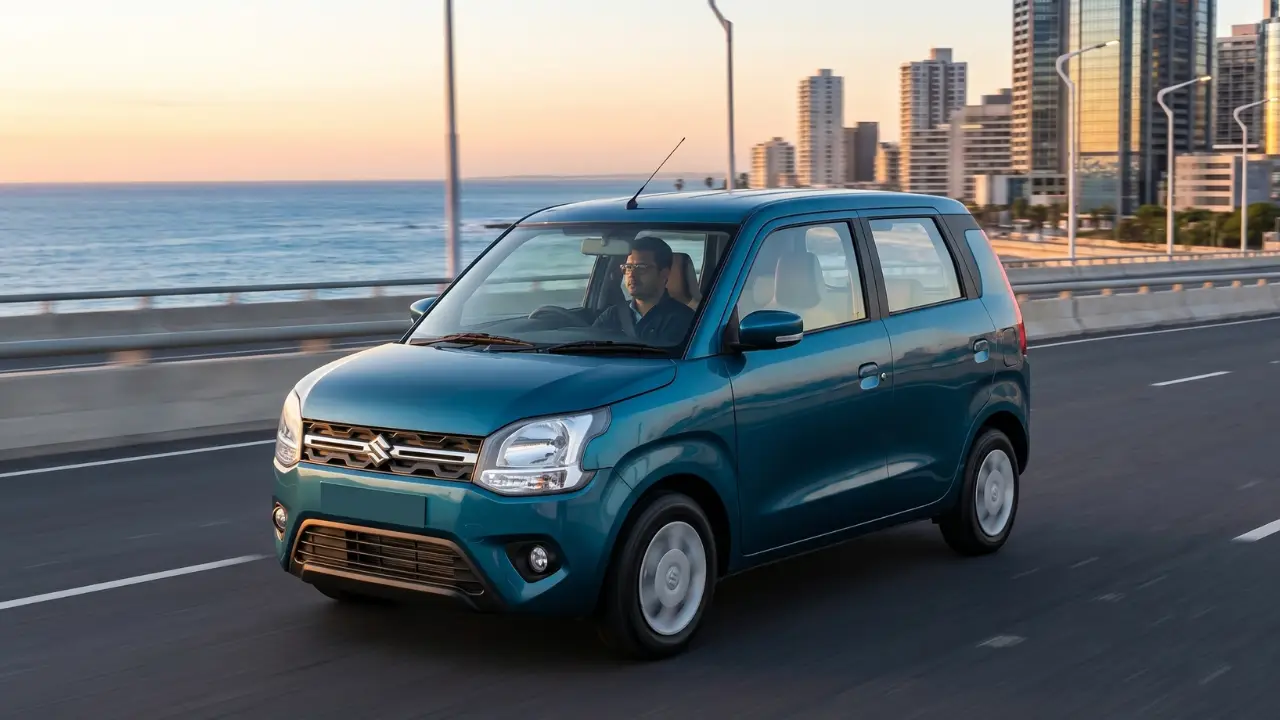
Let’s be honest. Finding a parking spot in Kolkata or Mumbai is a nightmare, fuel prices aren’t getting any lower, and most people buying their first car just want something that works without burning a hole in their pocket every month. That’s exactly why the Maruti Suzuki Wagon R keeps selling in ridiculous numbers. Nearly 1.98 lakh units in FY2025 alone. That’s not luck. That’s a car that genuinely understands its buyers.
I’ve been tracking this segment for a while now, and the Wagon R is one of those products that doesn’t try to be everything. It just does the important stuff really well.
Why the Wagon R Still Makes Sense in 2026
Here’s the thing nobody tells you about the Wagon R. The boxy shape that looks boring from the outside is actually the whole point. That tall roofline means you and three other adults can sit inside without anyone’s head touching the ceiling. Entry and exit is easy, especially for older family members.
Maruti even added a swivel seat option in late 2025 for buyers with elderly parents or passengers with mobility issues. It’s a small thing, but it tells you Maruti is actually paying attention to who buys this car in real Indian households.
What it doesn’t do is excite you. There’s no punchy styling, no fancy ambient lighting, no sporty steering feel. If that’s what you’re looking for, this is the wrong car. But if you need a reliable, practical daily driver that won’t drain your salary, the Wagon R is genuinely tough to beat.
Also Read: New VinFast VF 8 SUV: Complete Guide to the 2nd-Gen Update, India Launch and Real-World Value
Maruti Suzuki Wagon R 2026 Price and Variants
Ex-showroom prices start at ₹4.99 Lakh and go up to ₹6.95 Lakh for the top ZXi+ AGS. On-road will obviously be higher depending on your city’s RTO charges and the insurance package the dealer pushes on you.
| Variant | Engine | Transmission | Ex-Showroom (Approx.) |
|---|---|---|---|
| LXi | 1.0L Petrol | 5-speed MT | ₹4.99 Lakh |
| VXi | 1.0L Petrol | 5-speed MT | ₹5.52 Lakh |
| VXi AGS | 1.0L Petrol | AMT | ₹5.97 Lakh |
| ZXi | 1.2L Petrol | 5-speed MT | ₹5.96 Lakh |
| ZXi+ | 1.2L Petrol | MT / AGS | ₹6.39 – 6.95 Lakh |
| LXi CNG | 1.0L CNG | 5-speed MT | ₹5.89 Lakh |
| VXi CNG | 1.0L CNG | 5-speed MT | ₹6.42 Lakh (approx.) |
Always check your local Maruti Arena dealer for the latest on-road price and current exchange or loyalty offers. Prices shift slightly city to city.
My personal suggestion: skip the base LXi unless budget is a hard constraint. It’s brutally bare-bones, manual windows in the back, a cabin that feels like a plastic box. Stretch to the VXi at minimum, and if you’re going automatic, the VXi AGS is solid value.
Engine Options, Mileage, and What to Actually Expect
If you’re doing bumper-to-bumper city traffic every single day, just go with the 1.0L K10C engine. Yes, it’s a 3-cylinder, so you will feel some vibrations when idling with the AC cranked up. But the fuel efficiency is genuinely impressive. Maruti claims 24.35 kmpl on the MT and 25.19 kmpl on the AGS. Realistically, in city use, expect somewhere between 17-20 kmpl depending on how heavy your right foot is.
The 1.2L K12N four-cylinder is noticeably smoother and pulls much better above 80 kmph. If you do regular Kolkata-to-Digha or Delhi-to-Agra type runs, this engine will feel far less strained. ARAI mileage sits at 23.56 kmpl, and real-world highway returns of 20-22 kmpl are realistic.
Now the CNG variant. This is where things get genuinely interesting for high-mileage users. ARAI rates it at 34.05 km/kg, and real-world numbers of 28-32 km/kg are completely achievable.
Here’s a quick calculation that makes the decision obvious for a lot of buyers:
1,500 km/month on CNG at ₹90/kg: roughly ₹3,900/month running cost. Same 1,500 km on petrol at ₹105/litre (at ~20 kmpl real-world): roughly ₹7,875/month.
That’s nearly ₹4,000 saved every single month, or about ₹48,000 a year. For many families, that’s a school fee. The CNG argument basically pays for the car’s price difference over two to three years.
One honest drawback though: the CNG tank sits in the boot. It eats up most of the luggage space. If you’re planning an airport trip with four people and their bags, you’re going to need a roof carrier or some creative packing. Worth knowing before you commit.
Cabin Space and Daily Practicality
The tall-boy design actually works. It’s not just marketing. At 1,675mm height, the headroom is genuinely impressive. You get more vertical space here than in some cars costing twice as much. The wheelbase of 2,435mm keeps the footprint small enough for tight city parking while still giving four adults a reasonably comfortable ride.
Boot space is 335-341 litres on the petrol variants. On CNG, that shrinks considerably because of the cylinder. Ground clearance of around 180mm handles Indian roads well. Speed breakers, waterlogged patches, broken stretches on state highways. I haven’t seen anyone scraping the bottom on a typical Indian road in a Wagon R.
One genuine weakness: the car is quite tall and relatively narrow at 1,620mm. On highways with strong crosswinds, like certain stretches of the Yamuna Expressway or NH48, the car does get nudged around a bit. It’s not dangerous but it’s noticeable if you’re coming from a lower, wider car.
The ZXi and ZXi+ add the SmartPlay infotainment with Apple CarPlay and Android Auto, steering controls, and better upholstery. For most buyers, the VXi is the practical choice. The top variants are nice but not dramatically better in daily use.
Also Read: New Nissan Tekton SUV 2026: Complete Guide to India’s Most Anticipated C-SUV
Safety Kit in the 2026 Wagon R
This is where Maruti got some well-deserved criticism for years. The older NCAP tests gave it 1-star adult protection and 0-star child protection. Not great numbers.
The 2025-26 updates have addressed a lot of this. The Wagon R now comes with 6 airbags across all variants, Electronic Stability Program, ABS with EBD, Hill Hold Assist, and rear parking sensors as standard. Real-world protection is genuinely better than before.
That said, the underlying body structure hasn’t changed dramatically. If you have young children and absolute crash safety is your top concern, test drive the Tata Punch or Nexon before you make a final call. The Wagon R has improved, but it’s not a segment leader on safety yet.
How It Stacks Up Against Rivals
| Aspect | Wagon R Edge | Where Rivals Win |
|---|---|---|
| Cabin Space | Best-in-segment headroom | Tiago feels more planted |
| Running Cost | CNG option is a clear winner | Tiago and Punch lack strong CNG |
| Service and Resale | Maruti network hard to match | Tata and Hyundai improving fast |
| Features | Adequate in ZXi and ZXi+ | Grand i10 Nios feels more premium |
| Drive Experience | Fine for city use | Tiago or Baleno more engaging |
| Safety Kit | 6 airbags and ESP now standard | Some rivals have stronger structure |
Against the Tata Tiago, the Wagon R loses on build quality and driving feel but wins clearly on cabin space and CNG running costs. Against the Hyundai Grand i10 Nios, the Nios genuinely feels more premium inside, but the Wagon R wins on sheer practicality and what Maruti ownership actually means in smaller towns where Hyundai service centres are still sparse.
Who Should Actually Buy This Car
First-time buyers, small families needing maximum space in a compact package, high-mileage daily commuters especially in cities with good CNG access. Cab operators and fleet buyers will find the CNG variant hard to justify ignoring.
In Kolkata specifically, CNG infrastructure has expanded a lot over the last two years. The running cost advantage is very real here now.
Skip it if you want something that feels exciting to drive or if you frequently travel long highway distances and want a refined cruiser. Also skip if your family trips regularly involve lots of luggage, because the CNG boot space issue will annoy you sooner than you think.
Final Take on the Maruti Suzuki Wagon R
The Wagon R does not pretend to be something it’s not. It is a practical, no-drama city car with running costs that make genuine financial sense, especially on CNG. The safety kit has improved meaningfully. The resale value and service network are still the best in the segment.
Is it perfect? No. The lower trims feel cheap, the AMT has its hesitation moments, the 1.0L three-cylinder isn’t the most refined engine at idle, and the tall body does get pushed around in crosswinds. But for what most Indian families actually need day to day, it delivers better than almost anything else in this price range.
Test drive both the petrol and CNG variants before deciding. Calculate your actual monthly running distance. And check the on-road price with your local Maruti Arena dealer because current offers and exchange bonuses can shift the numbers quite a bit.
Are you considering the Wagon R for city commuting or something else entirely? Drop your city and use case in the comments. Happy to help you figure out which variant actually makes sense for your situation.
FAQs
What is the price of Wagon R in 2026?
The Wagon R starts at ₹4.99 Lakh (ex-showroom) for the base LXi petrol and goes up to around ₹6.95 Lakh for the top-end ZXi+ AGS. CNG variants sit between ₹5.89 Lakh and ₹6.42 Lakh approximately. On-road prices will be higher depending on your city’s RTO charges, insurance, and whatever accessories the dealer bundles in. Always get a written on-road quote from your local Maruti Arena before comparing.
Is there a Wagon R 7 seater?
No, there isn’t. The Wagon R sold in India is strictly a 5-seater hatchback. There’s a 7-seater version called the Wagon R in Japan, but Maruti has never brought that to the Indian market. If you need a 7-seater in a similar price range, the Maruti Ertiga is the more practical option to consider. Don’t believe dealer claims or random YouTube videos saying a 7-seater Wagon R is coming to India anytime soon. There’s no confirmed launch for that.
Which variant of Wagon R is best?
Honestly depends on how you use the car. For most buyers doing regular city commuting, the VXi CNG is the sweet spot. You get decent features, the CNG running cost advantage, and you’re not overpaying for stuff you don’t need. If CNG isn’t available or practical in your city, go with the ZXi 1.2L MT for the extra engine refinement and better features. For people who hate clutching in traffic, the VXi AGS is a reasonable choice, just know the AMT will feel hesitant during quick overtakes. Skip the base LXi entirely unless budget is very tight.
What is the new model of Wagon R?
As of May 2026, Maruti hasn’t launched a full-generation change. The current Wagon R is still running on the same HEARTECT platform with incremental updates over the past couple of years, the most notable being the 6 airbags and ESP addition across all variants and the swivel seat option introduced in late 2025. There are rumours floating around about a mid-cycle facelift possibly arriving in late 2026 with some cosmetic updates and feature additions, but nothing has been officially confirmed by Maruti yet. If you need a car now, no reason to wait. If you’re flexible for another 6 to 8 months, keep an eye on official Maruti announcements.