New Mahindra Bolero 2026: Complete Guide to Price, Features, Mileage and Why It Still Sells in Huge Numbers
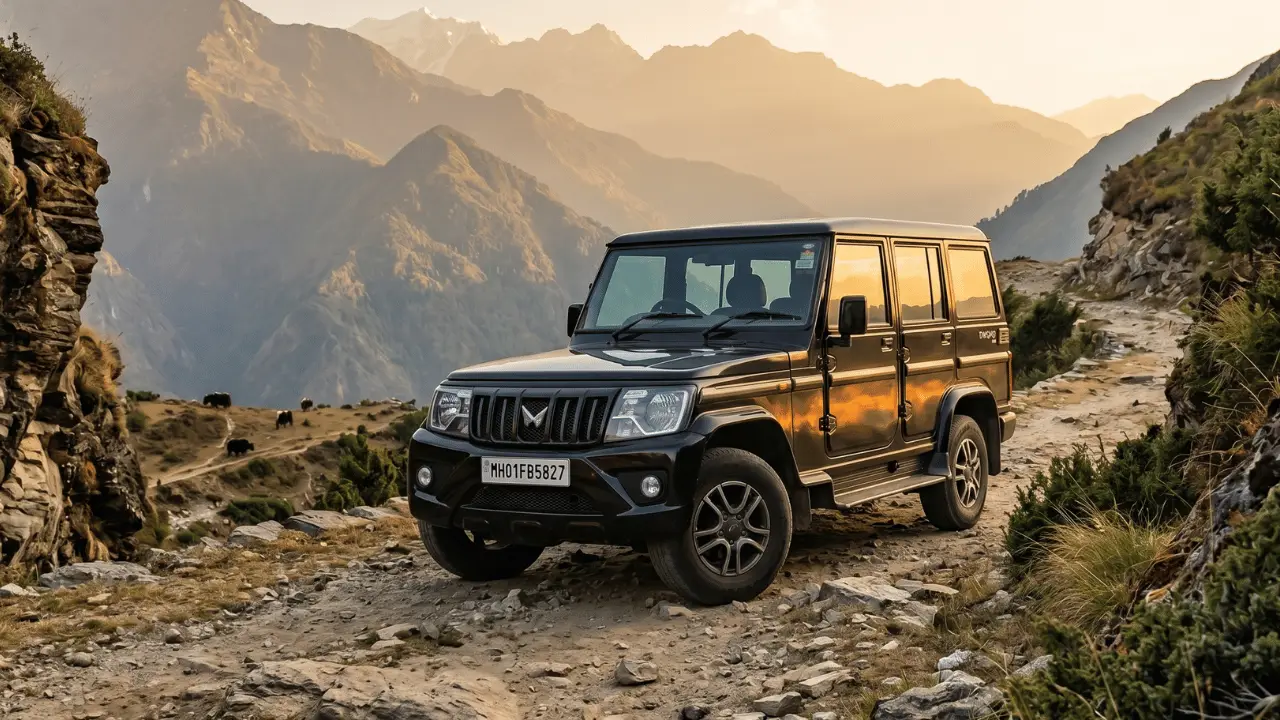
Back in 2024, if someone told you that a 26-year-old SUV design would still be selling 8,000 to 12,000 units every month in 2026, you probably would not have believed them. But here we are. The Mahindra Bolero 2026 is doing exactly that, and nobody seems surprised anymore. This is not hype. This is just what happens when a vehicle genuinely solves real problems for real people across India’s Tier 2, Tier 3 cities and villages.
The October 2025 facelift brought some actual useful updates this time. Not just sticker changes. Let us get into it properly.
Background: Why the Bolero Is Still a Thing in 2026
The Bolero has been on Indian roads since 2000. That is 26 years. Think about that for a second.
Most global SUV nameplates do not survive that long in the same market without a complete overhaul. The Bolero survived because Mahindra understood something simple: the people buying this vehicle do not want a fashion statement. They want something that starts every morning, carries their family or goods, survives the kind of roads that would snap a monocoque crossover in two, and does not cost a fortune to fix when something eventually goes wrong.
This 2026 model year is the facelifted version that launched in October 2025. A next-generation Bolero on a completely new platform is expected around August 2026, but that has not launched yet. What you see in showrooms today is the refreshed current generation, and it is a solid package.
Mahindra Bolero 2026 Price: Variant-wise Breakdown
So the pricing right now, ex-showroom, looks like this.
The base B4 variant is at Rs 7.99 lakh. The B6 sits between Rs 8.69 and Rs 8.94 lakh. The B6(O) goes from Rs 9.09 to Rs 9.35 lakh. And the top-end B8 is priced between Rs 9.69 and Rs 9.90 lakh.
Quick note: Mahindra revised the prices slightly in early May 2026, so if you check the dealer price sheet today it may be marginally higher than the figures above. On-road in Delhi, for example, the B8 can touch around Rs 11.4 lakh after taxes and registration.
For a proper 7-seater diesel SUV with a body-on-frame chassis, these numbers are genuinely hard to beat in this segment. That is the honest truth.
Also Read: New Volkswagen Terra 2026: Complete Guide to VW’s Most Affordable SUV Coming to India
Key Features of the Mahindra Bolero 2026 Facelift
This is where the 2025 facelift made the most difference. Mahindra finally gave the Bolero a 7-inch touchscreen with Android Auto and Apple CarPlay. Yes, it took this long. But it is here now, and it works.
Along with that, you also get a digital instrument cluster, leatherette upholstery on the B8, keyless entry, USB-C charging ports, rear AC vents, and power windows. The B8 also gets alloy wheels for the first time in the standard Bolero lineup.
The new Stealth Black colour option is worth mentioning. It actually makes the Bolero look way sharper than the older colour options. A few Bolero owners I have spoken to said this colour alone made them pull the trigger on the B8 after years of waiting.
Safety-wise, you get dual airbags, ABS with EBD, rear parking sensors, and ESC on the higher variants. Not class-leading, but the basics are properly covered.
The bumper and grille design has been revised to look a bit more current without going overboard. It still looks like a Bolero, which is exactly what long-time buyers want.
Performance and Real-World Mileage: What Actually Happens on the Road
The engine is a 1.5-litre 3-cylinder mHawk75 turbodiesel. It produces 75 PS and 210 Nm of torque, with peak torque coming in between 1,600 and 2,200 RPM. Paired with a 5-speed manual and rear-wheel drive only.
ARAI rating is 16 to 16.5 kmpl. In real-world conditions, most owners report around 14 to 15 kmpl across city and highway driving. That is a fair and honest number for a loaded 7-seater diesel in this weight class.
The torque band is what makes this engine useful for Bolero-type usage. Low-end grunt means the vehicle pulls strongly even when fully loaded, on uphill roads, or on loose surfaces. It is not exciting to drive in a sporty sense. But it is deeply capable in the way that actually matters for its buyers.
Ground clearance is around 183 mm. The ladder-frame chassis with leaf-spring rear suspension is tuned for rough terrain, not comfort. The ride is bouncy in the city, and that is just something you accept with this vehicle. On broken village roads or unpaved tracks, it is actually composed and predictable in a way most crossovers are not.
The fuel tank is 60 litres, which gives you a solid range between fill-ups. On long runs from city to rural destinations, this matters more than most people realise.
Mahindra Bolero 2026 vs Rivals: Where It Actually Stands
People often compare the Bolero to the Bolero Neo, the Thar, or crossovers like the Brezza. But honestly these are not the same products for the same buyer.
The Bolero Neo starts at Rs 8.85 lakh and goes up to Rs 13 lakh. It has a monocoque platform, which means a softer and more car-like ride. It is more comfortable in daily city driving. But it is not built for the same level of operational punishment that the standard Bolero handles.
The Thar starts above Rs 11 lakh and is aimed at a completely different buyer, someone who wants a lifestyle off-roader. Not a daily workhorse.
Crossovers like the Brezza give you more features and more comfort, but they are not built for what Bolero buyers actually do with their vehicles.
Where the Bolero 2026 genuinely wins is total ownership cost. Parts are available in virtually every town across India. Any local mechanic knows this vehicle. Resale value holds strong, typically 70 to 80 percent after five years of regular use. These are not small advantages.
Who Should Buy the Mahindra Bolero 2026
If you run a business in a Tier 2 or Tier 3 city, operate a fleet, work in agriculture or logistics, or need a vehicle that covers poor roads daily without racking up repair bills, the Bolero 2026 makes a lot of sense.
Government departments, police fleets, forest departments, and similar buyers have trusted the Bolero for years, and the 2026 model gives them the same reliability with a few modern additions.
First-time SUV buyers in non-metro areas who need 7 seats and diesel economy without the complexity of electronics-heavy vehicles will also find it a practical buy.
Urban buyers considering it as a secondary vehicle for weekend trips or occasional off-road use can look at the B8 variant. The added tech makes it feel reasonably modern now.
Sales Numbers: The Market Has Already Voted
April 2026 sales came in at approximately 8,917 units. Monthly averages sit between 8,000 and 12,000 units through FY26. Total FY26 sales crossed 1 lakh units.
These are not numbers driven by heavy discounting or dealer push schemes. This is genuine repeat and word-of-mouth demand from buyers who either owned a Bolero before or know someone who did. In rural and semi-urban India, the Bolero’s reputation basically sells itself.
Also Read: New Nissan Tekton 2026: The Bold Indian SUV That Could Finally Give Creta a Real Fight
What Is Coming Next: New Generation Bolero 2026
Mahindra is working on a completely new generation Bolero built on the NFA (New Flexible Architecture) platform. This next-gen model is expected around August 2026 or the Diwali window. It is supposed to bring a major design overhaul and possibly hybrid or electric powertrain options.
But as of today, May 2026, none of that has launched. The current facelifted model is what is available at dealerships.
If you are comfortable waiting 4 to 6 months, it makes sense to see what the new generation brings. If you need a vehicle now and the budget fits, the current Bolero 2026 is a well-proven, fairly priced option.
Final Thoughts
The Mahindra Bolero 2026 is not for everyone, and it does not try to be. It is built for a specific kind of buyer who values durability, running economy, and no-drama reliability over features and road comfort.
The facelift has made it more relevant without changing its identity. The pricing remains competitive. The diesel engine remains efficient. And the sales numbers prove that a very large section of India’s vehicle buyers still prefer this kind of honest engineering over anything else.
If the basics matter more to you than the extras, the Bolero 2026 is still one of the smartest buys in the Indian SUV market right now.
Are you going with the current facelifted Bolero, or planning to wait for the next-generation model launching later this year?
Frequently Asked Questions
What is the price of Mahindra Bolero 2026?
The Mahindra Bolero 2026 starts at Rs 7.99 lakh for the base B4 variant (ex-showroom) and goes up to Rs 9.90 lakh for the top-end B8. On-road prices in cities like Delhi can range from approximately Rs 9.2 lakh to Rs 11.4 lakh depending on the variant.
What is the mileage of Mahindra Bolero 2026?
The ARAI-certified mileage is 16 to 16.5 kmpl. In real-world city and highway driving, most owners report around 14 to 15 kmpl.
When is the New Bolero 2026 launch date?
The next-generation Bolero on Mahindra’s NFA platform is expected around August 2026 or the Diwali 2026 window. As of May 2026, it has not launched. The current facelifted model remains available at dealerships.
What is the top model on-road price of New Bolero 2026?
The B8 top variant is priced between Rs 9.69 and Rs 9.90 lakh ex-showroom. On-road in major cities the price can go up to approximately Rs 11.4 lakh after registration, insurance, and applicable taxes.
What are the new features in Mahindra Bolero 2026?
The 2025 facelift added a 7-inch touchscreen with Android Auto and Apple CarPlay, a digital instrument cluster, Stealth Black paint option, alloy wheels on the B8, leatherette upholstery, keyless entry, USB-C charging ports, rear AC vents, and revised RideFlo suspension tuning.