New Jeep Avenger EV 2026: Complete Guide to Specs, India Launch, Price and How It Stacks Up Against Tata Nexon EV
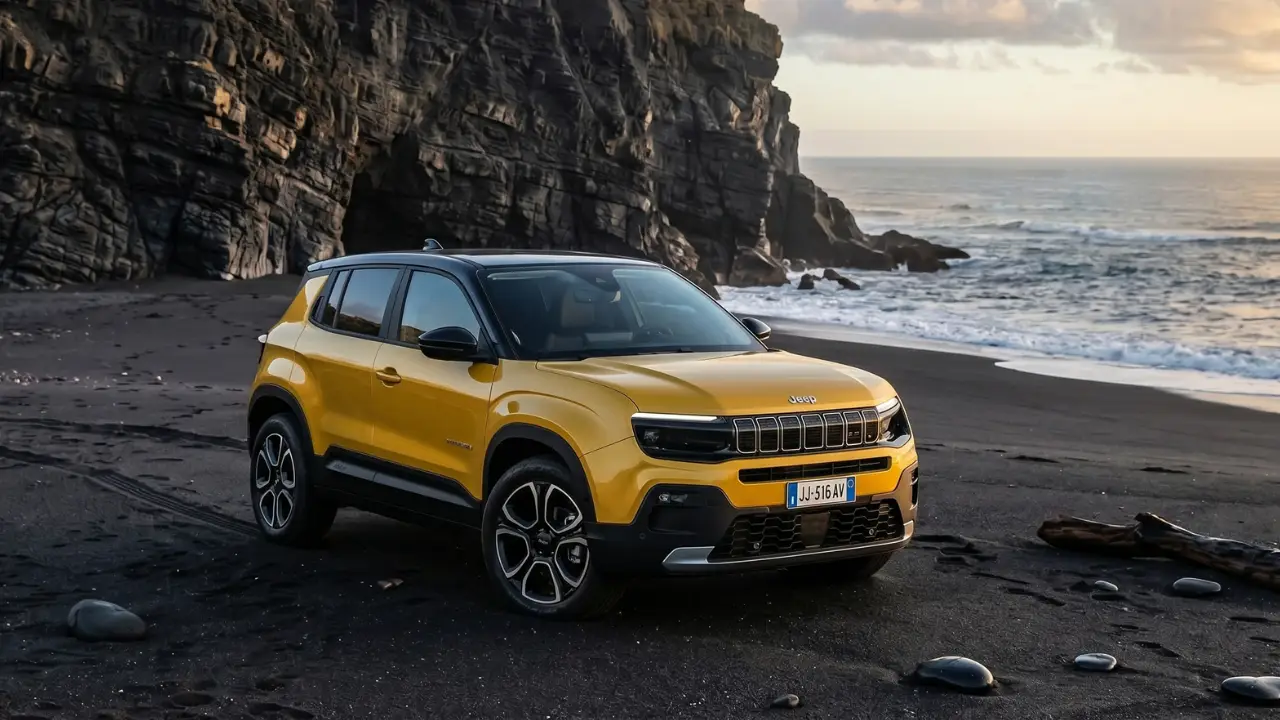
The Jeep Avenger EV has been turning heads in Europe for a while now. It won European Car of the Year, sold well across key markets, and built a genuinely strong reputation as a compact electric SUV that’s actually fun to drive. And now Indian buyers are starting to ask: when does it come here, and is it even worth the wait?
The 2026 facelift, revealed just this month, sharpens the look and adds more tech. But it’s still the same core car underneath. Whether that’s enough to make a dent in India’s already competitive EV market is the real question. Let’s get into it.
What’s New in the 2026 Jeep Avenger EV
Jeep refreshed the Avenger in May 2026 with an updated exterior — an illuminated seven-slot grille, new LED headlights, sportier bumpers. Inside, there’s more tech on offer in higher trims. The powertrain, though, stays exactly as it was. And honestly, that’s fine, because the original setup was never the weak point.
It runs a 50.8 kWh usable battery on a 400V NMC architecture. The front-mounted motor puts out 156 hp and 260 Nm, which isn’t fast by today’s EV standards, but it’s more than enough for city driving and occasional highway stints. Zero to 100 takes around 9 seconds. Top speed is 150 km/h.
Size-wise, it’s compact at 4,084 mm long with a 2,562 mm wheelbase. Boot space starts at 355 litres and opens up to around 1,252 litres with the rear seats down. If you’re navigating Kolkata’s narrow lanes or Bengaluru’s traffic daily, that footprint is genuinely useful.
Key Specs: Quick Reference Table
| Specification | Details |
|---|---|
| Battery (Usable) | 50.8 kWh (NMC, 400V) |
| Motor Power | 156 hp / 115 kW |
| Torque | 260 Nm (FWD) |
| 0-100 km/h | ~9.0 seconds |
| Top Speed | 150 km/h |
| WLTP Range | Up to 404 km |
| India Real-World Estimate | 300-340 km (AC on, mixed traffic) |
| DC Fast Charging (10-80%) | ~28 minutes at 100+ kW |
| AC Charging (11 kW onboard) | ~5.5 hours (0-100%) |
| Boot Space | 355 L (up to 1,252 L folded) |
| Kerb Weight | ~1,595 kg |
| Length / Wheelbase | 4,084 mm / 2,562 mm |
What’s the Real-World Range in India?
WLTP figures are tested in European conditions. India is a different story entirely.
Factor in stop-go Delhi traffic, Kolkata humidity, AC running from April through October, and the occasional highway stretch at 100 km/h. In those conditions, you’re looking at roughly 300 to 330 km on a full charge during summer months. If you’re driving hard with the AC on blast, that number can drop closer to 280 km. Still workable for a daily urban commuter, but it’s something to keep in mind if you regularly do long highway runs.
For charging, the Avenger supports DC fast charging at up to ~100-107 kW. That’s 10-80% in about 28 minutes. Practically speaking, you can stop at a Tata Power or Zeon charger on the highway, grab a coffee, and be back on the road before the break feels over. That’s a decent real-world charging experience.
Also Read: New Hero Karizma XMR 250: The Most Powerful 250cc Sportsbike India Has Been Waiting For
The car also comes with a heat pump as standard, which helps reduce the AC-related range drain in Indian summers. Not a complete fix, but it helps.
One more thing worth noting: global reviews mention solid approach and departure angles for a car this size. That matters in India, where broken roads, monsoon flooding, and uneven surfaces are just part of daily driving. The Avenger should handle those situations better than most city EVs.
India Launch and Pricing: What We Actually Know
Jeep hasn’t officially confirmed the Avenger EV for India yet. Industry estimates and auto portals are pointing to a possible launch window of late 2026 or 2027, with the petrol version likely arriving before the EV variant. All pricing figures floating around right now are speculative.
Most estimates put the expected price somewhere between Rs 12 and Rs 20 lakh, and that’s a wide range for a reason. It depends entirely on whether Jeep brings it as a CBU import (which pushes costs up significantly) or assembles it locally through Stellantis’s India operations.
Here’s the good news on the tax side: because it’s an EV, the Avenger qualifies for India’s flat 5% GST rate, regardless of length. This gives Jeep some pricing flexibility if they go the local assembly route. Whether they use that flexibility wisely is another question.
Don’t lock in any purchase decisions based on current price speculation. Wait for an official announcement.
Jeep Avenger EV vs Tata Nexon EV vs MG ZS EV
| Parameter | Jeep Avenger EV | Tata Nexon EV | MG ZS EV |
|---|---|---|---|
| Price (ex-showroom) | Rs 12-20 L (speculative) | Rs 12.49-17.49 L | Rs 17.99-20.50 L |
| Usable Battery | 50.8 kWh | 30 / 45 kWh | 50.3 kWh |
| Power / Torque | 156 hp / 260 Nm | ~142 hp / 215 Nm | 174 hp / 280 Nm |
| Claimed Range | ~404 km (WLTP) | Up to 489 km (MIDC) | 461 km |
| DC Fast Charging | ~28 min (10-80%) | Good (varies by variant) | Decent |
| Key Strength | Style, brand, light off-road | Value and service network | Features and cabin space |
| Key Weakness | Unproven in India, limited service | More conventional design | Higher price point |
The Nexon EV wins on value and after-sales peace of mind. The ZS EV is the more premium, spacious option. The Jeep Avenger EV has a bigger battery than the base Nexon, comparable capacity to the MG, and a personality neither of them can really match. But personality alone doesn’t close deals in India.
Also Read: Hyundai Inster 2026: The Under-₹15 Lakh EV That Might Just Beat the Tata Punch
Who Should Seriously Consider the Avenger EV
Not everyone. And that’s fine.
This car is built for urban buyers in metros who want something that stands out. If you’re in Mumbai, Delhi, Hyderabad, or Bengaluru, drive mostly in the city, and want a compact SUV that doesn’t look like every second car in the parking lot, the Avenger makes a genuinely strong case. The Selec-Terrain modes and decent ground clearance also make it more capable on bad roads or light off-roading than it looks.
Jeep loyalists who want to go electric without switching brands will find this a natural move. First-time EV buyers who are attracted to the badge and want something with driving character over raw specs will also find it appealing.
If you’re in a Tier-2 or Tier-3 city where Jeep service centres are hard to find, though, it’s a different calculation. The service network is genuinely limited right now, and that’s not a small concern. The Nexon EV’s Tata network is one of its biggest real-world advantages.
Honest Take: Will the Avenger EV Actually Work in India?
The car itself is good. That part isn’t in question.
What’s uncertain is the execution. India’s EV segment is unforgiving. Buyers here are value-aware, after-sales-sensitive, and they talk. One bad service experience in a city without a nearby dealer and the word spreads fast. Jeep knows this, and they’ll need to address it before launch, not after.
For the Avenger to succeed here, Jeep needs to start it under Rs 18 lakh on-road in key cities, expand service infrastructure quickly, and keep the CBU route as a short-term bridge rather than a long-term strategy. Get those three right, and there’s a real audience for this car in India. The “different from the crowd” buyer is real, and nobody in the compact EV space is currently serving them well.
If the pricing ends up north of Rs 20 lakh, though, it becomes a tough sell. At that point you’re competing with the MG ZS EV and edging into territory where buyers expect significantly more range, space, or features for the premium.
The Avenger has that rare quality where people see it and say “I want that.” In car sales, that counts for a lot. But it won’t matter if the fundamentals aren’t right.
So what’s your take: if the Jeep Avenger EV hits India at around Rs 16-17 lakh, does it go on your shortlist, or does the service network uncertainty keep you away?