Hyundai Inster 2026: The Under-₹15 Lakh EV That Might Just Beat the Tata Punch
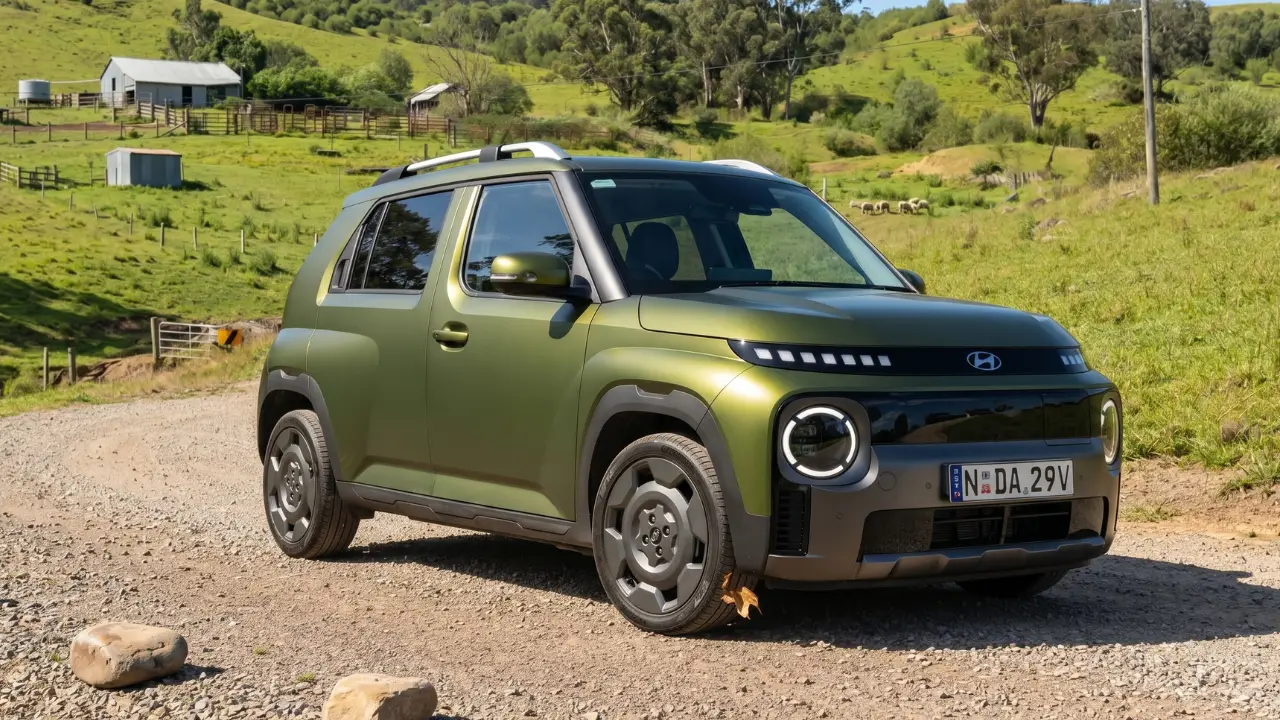
Okay so I’ll be honest — I wasn’t expecting much when I first heard “Hyundai is bringing a tiny A-segment EV to India.” Felt like another compromise car, you know? Small battery, basic features, priced just low enough to look affordable. But then I actually dug into the Hyundai Inster specs properly, and my opinion shifted pretty fast.
This thing won TopGear.com’s Supermini of the Year 2026 in Europe. Not some regional award — Top Gear. And looking at what it offers, it is not hard to see why.
India launch is expected around June 2026 or festive season. Pricing should start somewhere between ₹11 and ₹12 lakh ex-showroom. If Hyundai gets those two things right, this could genuinely become the most sensible affordable EV purchase of the year.
Expected Price and India Launch
The ₹10 to ₹13 lakh range is what most reports are pointing to, with base trims likely sitting around ₹11 to ₹12 lakh. That puts it right on top of Tata Punch EV territory, which is exactly where Hyundai wants to be.
State EV subsidies are still running in Maharashtra, Delhi, and Gujarat through 2026. So the effective on-road number for buyers in those states will be lower than the sticker price suggests. And if you are in Uttar Pradesh, EV road tax is fully exempt there too — which can shave off a meaningful chunk from the final on-road cost. Worth checking your specific state policy before you finalize anything.
Hyundai’s service network is another quiet advantage here. Especially if you are in Kolkata, Mumbai, or Chennai — the dealer and workshop infrastructure is already solid. For first-time EV buyers, that kind of peace of mind matters more than people admit.
Also read: Maruti Suzuki Wagon R 2026: Complete Guide to Price, Mileage, Specs, and Real-World Value
Hyundai Inster Specs: What You Are Actually Getting
Two battery options globally — 42 kWh standard (300+ km WLTP) and 49 kWh Long Range (355 to 370 km WLTP). Real-world Indian numbers with AC running and city traffic will probably land between 250 and 320 km. That is honest Hyundai Inster range in India, not brochure range.
Power is 97 PS on standard and 115 PS with 147 Nm on Long Range. Zero to 100 in roughly 11 seconds. Not fast, but the instant torque in traffic feels responsive enough for everyday use.
The DC fast charging goes up to 120 kW — 10 to 80 percent in around 30 minutes. That is the number that surprised me most. Most rivals in this segment max out at 50 kW. The Battery Management System does cap effective peak draw around 85 kW to protect the cells, but quoting 120 kW capability is standard practice and the real-world charge times hold up.
But here is the catch.
Global ground clearance is around 144 mm. That is fine for European roads. For Indian roads? Borderline. Hyundai will hopefully bump this before the India launch, but nothing is confirmed yet. Final India-spec numbers on ground clearance, battery calibration, and feature list will only be clear closer to the actual launch date.
Features: The Stuff That Actually Matters Day to Day
Two 10.25-inch screens for infotainment and the driver display. Sunroof, wireless charger, ambient lighting on higher trims. ADAS features like Forward Collision Avoidance and Lane Keeping — though the India-spec might trim some of that down.
The sliding rear seats are genuinely clever. You can push them forward for boot space or pull them back for legroom — 16 cm of adjustment range. Boot goes from 238 litres to 351 litres normally, and 1,059 litres with seats folded. In a car this small, that is impressive packaging.
Now let’s talk about V2L — because if you have ever sat through a summer power cut in Kolkata or Chennai, this feature hits differently.
V2L lets you draw up to 3.6 kW from the car battery to power appliances, charge laptops, run a fan, whatever you need. Not a gimmick. Not a party trick. Genuinely useful in the Indian context where grid reliability is still inconsistent in many areas. No competitor at this price point does this.
Hyundai Inster vs Tata Punch EV: Which Is Better for Indian Roads?
| Feature | Hyundai Inster | Tata Punch EV |
|---|---|---|
| Starting price | ₹11-12 lakh (expected) | ₹10.5 lakh |
| Long Range battery | 49 kWh / 355-370 km | 35 kWh / ~421 km (ARAI) |
| DC fast charging | Up to 120 kW | 50 kW |
| V2L support | Yes, 3.6 kW | No |
| Rear seat flexibility | Sliding, 16 cm | Fixed |
| Ground clearance | ~144 mm (global) | ~187 mm |
| Service network | Strong in metros | Wider across India |
The Punch EV’s ground clearance and service reach outside metros is a real advantage — do not underestimate that. But the Inster hits back with faster charging, V2L, and a more premium interior feel. If you are city-based, the Inster edges ahead on overall value. If you are anywhere outside a major metro, the Punch EV is still the safer, more practical bet.
Running Costs and What It Means for Your Wallet
Around ₹1 to ₹2 per km on electricity. A petrol car in the same segment costs you ₹6 to ₹8 per km right now. Do that math over four years of city commuting and you are looking at savings north of ₹3 lakh, easily. The Inster also fits comfortably in the upcoming EV cars under 15 lakh bracket where running cost savings genuinely offset the slightly higher upfront cost versus a petrol hatchback.
No engine oil. Fewer brake pad replacements because of regenerative braking. Simpler drivetrain with less that can go wrong. The ownership cost story is genuinely strong here.
Also read: New VinFast VF 8 SUV: Complete Guide to the 2nd-Gen Update, India Launch and Real-World Value
Who Is This Car Actually For
Metro or Tier-1 city buyer. Mostly city driving, occasional highway. Wants something refined and feature-rich without touching the ₹15 lakh mark. Searching for affordable electric cars in 2026 that do not feel like a compromise.
Young professionals upgrading from a petrol hatchback will probably find this the most natural transition available right now.
Skip it if you drive rough roads regularly, need five proper seats, or live somewhere Hyundai service is still building its presence.
Verdict
The Hyundai Inster is a properly thought-out small EV. Not a budget compromise with a battery slapped in — it is a well-packaged, feature-complete car that happens to be affordable. The V2L, the fast charging, the sliding seats — these are not filler features. They are genuinely useful in the Indian context.
Ground clearance is the one thing I want confirmed before recommending it without hesitation. If Hyundai bumps that up for India and holds the price around ₹12 lakh, this becomes a very strong alternative to the Punch EV for city buyers.
Wait for the official India-spec announcement. Do not book blind. But absolutely keep this one on your shortlist.
At ₹12 lakh, would you take the Inster over the Punch EV — or does the ground clearance issue still bother you too much? Drop your thoughts in the comments.