Kia Syros 2026 Complete Guide: Price, Mileage, Specs and the Real Reason It’s Worth Your Attention
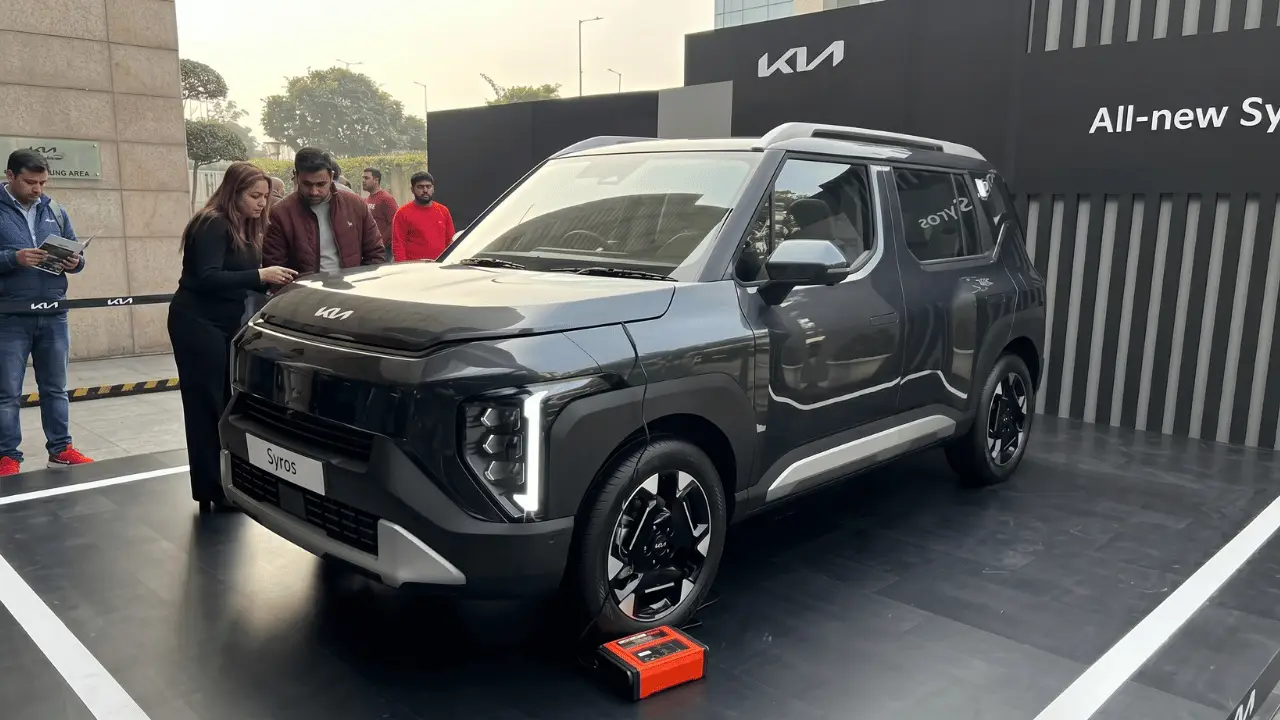
If you’ve been shortlisting compact SUVs under ₹15 lakh this year, you’ve probably already test-driven the Nexon or looked up the XUV 3XO. Fair enough. But after going through the April 2026 update of the Kia Syros 2026 in detail, I think a lot of buyers are overlooking what is genuinely one of the more well-rounded cars in this segment right now. It is not perfect, but for the price it is asking, it gets a lot of important things right.
A Quick Background on What Changed in 2026
Kia launched the MY2026 refresh in April 2026. The changes are not revolutionary. Revised front and rear bumpers, glossy black ORVMs and skid plates, a couple of new colour options like Ivory Silver and Magma Red, and some new entry-level variants that bring the starting price down to ₹8.40 lakh ex-showroom.
The one decision that caused some noise was removing the Level 2 ADAS and the 360-degree camera from the entire lineup. Honestly though, this was a smart call. If you have driven on Indian roads with Lane Keep Assist turned on even once, you know how aggressively it fights you. Most buyers in this segment switch it off after a week. Dropping it to bring the price down actually makes sense here.
New trims were added too: HTE, HTE(O), HTK+(O), and HTX(O). The diesel automatic, which earlier felt out of reach for many buyers, is now around ₹2.48 lakh more affordable in certain trims. That is a meaningful difference.
The Kia Syros Interior: Where It Actually Stands Out
This is where the Syros justifies itself. The tall-boy design gives you headroom and rear knee room that feels genuinely generous, not just “good for the segment.” If your family does a Kolkata to Digha drive or a Delhi to Chandigarh run on weekends, the rear seat is where you will notice the difference compared to something like the Venue or Brezza.
Top trims get what Kia calls the Trinity Panoramic Display: a 12.3-inch touchscreen, a 12.3-inch digital instrument cluster, and a 5-inch climate control screen all sitting together on the dashboard. It looks very premium in person. The 10.25-inch screen on the mid-trims does the job fine too and handles wireless Android Auto and Apple CarPlay without any fuss.
Ventilated front and rear seats are available on higher trims, and in Indian summers that is not a luxury anymore. The dual-pane panoramic sunroof, wireless charger, Harman Kardon 8-speaker setup, and rear sunshades round out the feature list nicely. Even the base HTE does not feel stripped: you get rear AC vents, a height-adjustable driver seat, and the basics covered.
One honest observation: the lower trims use more hard plastic on the dashboard than the press images suggest. It is not bad, but if you are coming from a Creta or Seltos test drive and jumping into an HTE, the difference in material quality is noticeable.
Kia Syros 2026 Specifications: Engines and What They Feel Like
Two engine options, both carried over unchanged from before.
The 1.0-litre turbo petrol makes 120 PS and 172 Nm. Paired with the 7-speed DCT automatic, it handles stop-and-go traffic in cities like Bangalore or Hyderabad pretty well. There is slight jerkiness in first gear at very low speeds, which is common with DCTs, but above 20 kmph it smoothens out. ARAI figures are 18.2 kmpl for the manual and 17.68 kmpl for the DCT. Real-world city mileage sits around 11 to 13 kmpl, which is fine for a turbo petrol.
The 1.5-litre diesel is the one that makes more sense for buyers who do regular highway runs. It puts out 116 PS and 250 Nm, and that torque is felt from very low RPMs. On the highway between Pune and Mumbai, for example, overtaking loaded trucks does not feel like a gamble. The diesel manual returns 20.75 kmpl on the ARAI cycle. Owner reports put real-world combined mileage between 18 and 22 kmpl, which over a year of high-mileage usage adds up to serious savings.
The diesel automatic is now available at more accessible price points, which is a big deal for people who want efficiency without sacrificing city driving comfort.
Both engines get Eco, Normal, and Sport drive modes. Higher trims also add Sand, Mud, and Snow terrain modes. Most Indian buyers will never use those, but it is there.
For reference, the car measures 3,995 mm in length on a 2,550 mm wheelbase, which is right at the sub-4-metre limit for tax benefits. Boot space is 390 litres with the rear seats in the default position, going up to 465 litres when you slide them forward.
Kia Syros 2026 Price: Full Variant Breakdown
| Variant | Petrol MT | Petrol DCT | Diesel MT | Diesel AT |
|---|---|---|---|---|
| HTE | ₹8.40 lakh | — | — | — |
| HTE (O) | ₹9.20 lakh | — | ₹10.00 lakh | — |
| HTK (EX) | ₹9.80 lakh | — | ₹10.60 lakh | — |
| HTK+ | ₹10.74 lakh | ₹11.94 lakh | ₹11.54 lakh | ₹12.74 lakh |
| HTK+ (O) | ₹12.00 lakh | ₹13.20 lakh | ₹12.80 lakh | ₹14.00 lakh |
| HTX | — | ₹14.00 lakh | — | ₹14.80 lakh |
| HTX (O) | — | ₹15.00 lakh | — | ₹15.80 lakh |
All prices are ex-showroom, pan-India. On-road costs vary by state but typically add ₹1.2 lakh to ₹2 lakh depending on registration, insurance, and TCS. For buyers in West Bengal, budget roughly ₹10 to ₹10.6 lakh on-road for the base HTE petrol.
The sweet spot, in my opinion, is the HTK+ diesel manual at ₹11.54 lakh. You get the efficient engine, solid features, and do not pay for the touchscreen upgrades that only matter if you are parking in tight spaces daily.
How It Stacks Up Against the Competition
Against the Tata Nexon, both cars share a 5-star Bharat NCAP rating, so safety is not the deciding factor. The Syros wins on rear-seat comfort and feature count at similar price points. The Nexon has a stronger brand recall in some markets but the Syros genuinely feels more premium inside.
The Mahindra XUV 3XO has punchier engine options and a loyal following, but the interior quality of the Syros is a step above. If you are the kind of buyer who notices the texture of the seat fabric or how the AC vents turn, the Syros will feel more satisfying.
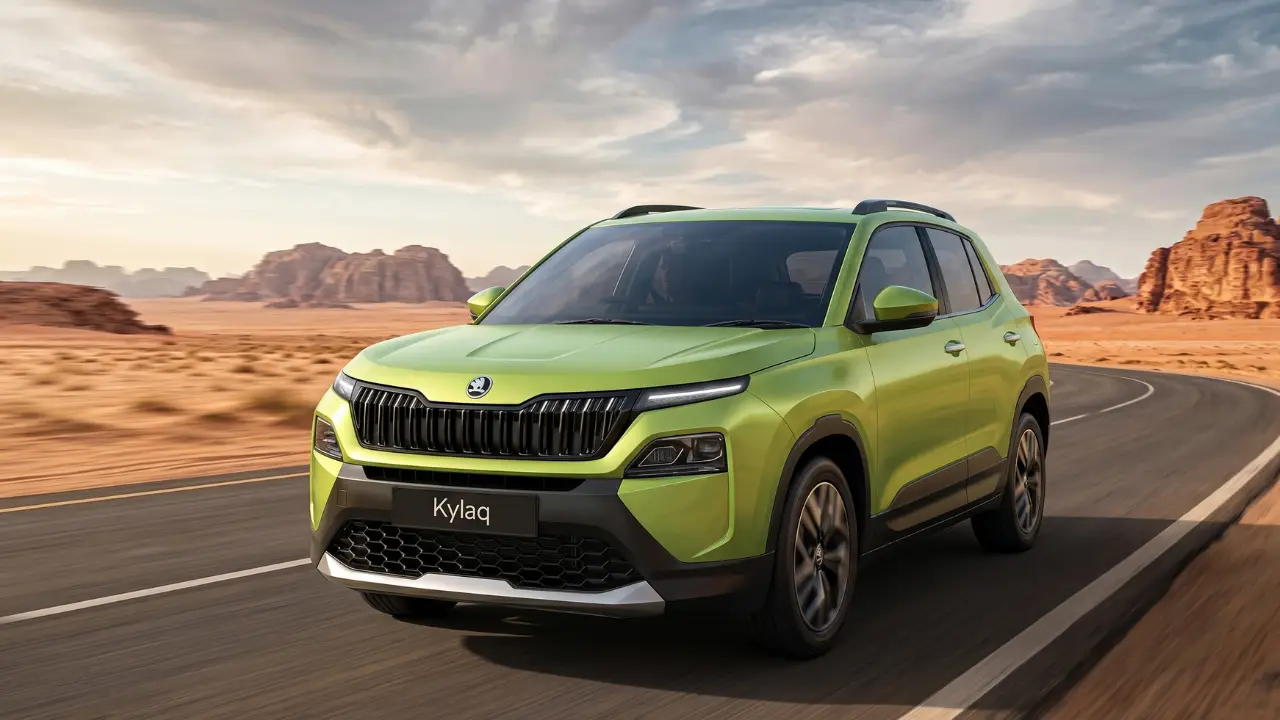
Against the Skoda Kylaq, the Syros simply offers more rear space and more features for the price. The Kylaq is solid, but it does not match up on rear-seat experience or the sheer list of comfort features.
Maruti Brezza and Hyundai Venue are cheaper to buy and maintain, but they are not in the same league when it comes to rear-seat space or the sense of quality the Syros delivers.
Who Should Actually Consider the Kia Syros 2026?
If you are a family of four upgrading from a hatchback and you do at least a couple of highway trips a month, the diesel manual in HTK+ or HTX trim is probably the most practical choice you can make under ₹15 lakh right now. The fuel savings are real, and the rear-seat space will make your passengers thank you.
City buyers who mostly stick to urban roads and want automatic convenience should look at the petrol DCT. The base HTE at ₹8.40 lakh is worth considering if budget is a hard constraint, but I would personally stretch to the HTK(EX) at ₹9.80 lakh for the extra features that make daily use more comfortable.
Also Read: New Volkswagen Terra 2026: Complete Guide to VW’s Most Affordable SUV Coming to India
Closing Thoughts
The Kia Syros 2026 is not trying to be the flashiest car in its segment. It is trying to be the most sensible one, and it largely succeeds. The price drop to ₹8.40 lakh opens it up to a completely new group of buyers, and the diesel automatic becoming more accessible is a genuine improvement for 2026.
The removal of ADAS is fine. The safety fundamentals with 5-star Bharat NCAP and 6 airbags are still there. What you are really buying is rear-seat space, build quality, and a level of feature richness that this price bracket does not always guarantee.
If you are in the market this month, at least go for a test drive before you finalize anything else.
Which variant makes sense for your needs: the budget-friendly petrol, the efficient diesel manual, or are you tempted by the newly accessible diesel automatic?
FAQ:
What is the Kia Syros 2026 starting price?
₹8.40 lakh ex-showroom for the base HTE petrol manual. On-road price in most cities will be around ₹9.6 lakh to ₹10.5 lakh depending on your state.
What is the Kia Syros on-road price?
Add approximately ₹1.2 lakh to ₹2 lakh to the ex-showroom price based on your city. States with higher road tax like Maharashtra will push it closer to the upper end of that range.
What kind of mileage can you actually expect?
The diesel manual is the clear winner here. ARAI says 20.75 kmpl but real-world owner reports consistently come in between 18 and 22 kmpl in combined driving. The petrol DCT gives around 11 to 14 kmpl in regular city and highway use, which is reasonable for a turbocharged engine.
What are the key Kia Syros specifications?
1.0L turbo petrol with 120 PS and 172 Nm, or 1.5L diesel with 116 PS and 250 Nm. Length is 3,995 mm, wheelbase 2,550 mm, and boot space 390 to 465 litres. 5-star Bharat NCAP rating with 6 airbags standard across all variants.
What is the Kia Syros interior actually like?
Tall-boy design with class-leading rear headroom and knee room. Top trims get the full Trinity Panoramic Display setup, ventilated seats, panoramic sunroof, and Harman Kardon audio. Mid-trims get a 10.25-inch touchscreen and solid basics. Lower trims use harder plastics on some surfaces, worth noting if you are a materials person.
Is there a 7-seater version of the Kia Syros?
No. The Syros is a 5-seater only. If you need a 7-seater from Kia, look at the Carens instead.
What is the Kia Syros diesel mileage in real Indian conditions?
In combined city and highway driving, most diesel manual owners report 18 to 22 kmpl. Pure highway mileage often crosses 22 kmpl. The diesel automatic drops to around 16 to 18 kmpl in real-world conditions, which is still efficient for an automatic SUV.